Advances in machine learning and computational modeling are transforming materials design by allowing researchers to predict and discover new materials more efficiently than traditional methods. At the forefront of this innovation is Professor Toshiaki Taniike of the Japan Advanced Institute of Science and Technology (JAIST), who leads the Laboratory on Materials Informatics. His team integrates high-throughput experiments, data science, and simulations to accelerate the development of materials like catalysts, polymers, nanocomposites, and nanomaterials such as MOFs and graphene. Driven by a lifelong passion for science, Taniike is focused on solving real-world problems through smarter, data-driven approaches to materials discovery.
“I studied chemical engineering to learn the basics of process design. But I realized I needed a deeper understanding of how chemical reactions actually work. That led me to quantum physics and simulations. However, simulations cannot fully capture the complexity of real reactions, so I returned to experiments, focusing on catalysis, because catalysts drive about 80% of chemical processes,” says Prof. Taniike, sharing how he voyaged through this field. Over time, he learned that discovery often comes through trial and error, so now, he combines high-throughput experiments with data science and machine learning to make this process faster and smarter.
Traditionally, discovering new materials or chemical reactions was mainly pursued as a trial-and-error experiment. Researchers would use what they already knew to take a calculated guess about which features or descriptors matter most when designing a new material. For example, they might think that surface area or crystal structure will affect catalyst performance and then test that idea. This worked well for improving things we already understand, but its utility is limited for discovering truly new reactions or materials because you cannot guess what you do not know.
What Prof. Taniike’s lab does differently is to combine high-throughput experimentation with machine learning techniques like automatic feature engineering. Instead of relying on human intuition to choose descriptors, they let the machine automatically generate and test thousands or even millions of possible descriptors to find the ones that really matter. They then run experiments in parallel to test these ideas, which makes the process 10 to 1000 times faster than doing it manually. Moving beyond the traditional trial-and-error approach, this lets them discover reactions or materials that were impossible to find before.
One such example is the oxidative coupling of methane (OCM), which is sometimes called a “dream reaction.” It aims to convert methane — the most abundant hydrocarbon feedstock — directly into ethylene, which is extremely valuable for producing plastics and chemicals. This is very challenging because methane is such a stable molecule. Usually, when you try to activate it, it just burns completely to CO2. The idea behind OCM is to carefully control this process so that instead of complete combustion, you stop the reaction at the ethylene stage. This could help reduce CO2 emissions from the chemical sector. Published in ACS Catalysis in 2020, Prof. Taniike’s study presents a high-throughput system for the OCM, generating a large, consistent dataset that enables automated performance evaluation, insightful data visualization, and accurate C₂ yield prediction through nonlinear machine learning.
Another study published in Communications Chemistry presents a combination of automatic feature engineering with the above high-throughput system, to streamline the discovery of high-performing catalysts for the OCM through automated descriptor design.
The team is also moving toward discovering entirely new kinds of reactions that could someday transform fields like energy, carbon recycling, or sustainable chemical manufacturing.
For more information: Japan Advanced Institute of Science and Technology
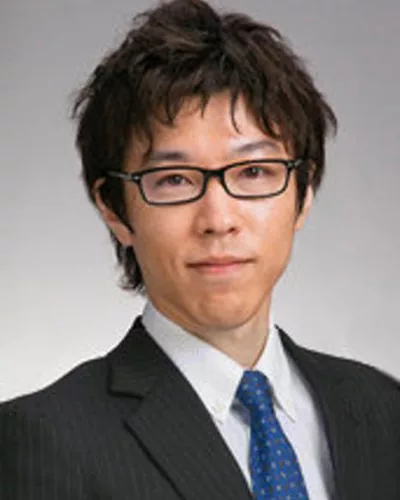
Image: Professor TANIIKE Toshiaki from JAIST.