Materials made from graphite, such as lithium-ion batteries, dislike water-or so researchers have assumed for decades. But a team of engineers from the University of Pittsburgh show that those materials are actually intrinsically attracted to water, or “hydrophilic.” It appears that past samples of graphite were likely contaminated by air, causing the samples to appear hydrophobic, according to the study.
The findings have particular implications for lithium-ion batteries and super capacitors, as both battery types are built from these materials. “This work could change the fundamental understanding of the surface properties of these materials,” says Lei Li, co-lead author of the paper and an assistant professor within Pitt’s Swanson School of Engineering. “These findings hold implications for producing stronger, more durable batteries. And, hopefully, it will also be important to the fabrication of devices in various nanotechnology areas.”
A former undergraduate engineering student Rebecca McGinley first noticed the inconsistent results regarding the surface’s “wetting behavior” or its reaction to water, pushing the team to further investigate the strange phenomena. When graphite and graphene are exposed to air, a thin layer of hydrocarbon (a compound made entirely of hydrogen and carbon) quickly contaminates the surface.
Using infrared spectroscopy and x-ray photoelectron spectroscopy, the team “saw” this hydrocarbon layer, noting its hydrophobic nature. However, when heat was used to remove this contaminant layer, the surface became hydrophilic.
“Plastic and other types of materials emit hydrocarbon into the air,” says Haitao Liu, co-lead author of the paper and an assistant professor in the department of chemistry. “And this hasn’t been a factor in past sample experiments. In the past, it was believed that graphite didn’t ‘like’ water, possibly because samples were always contaminated, which typically happens within 10 minutes.”
Liu and Li say this wettability could have an impact on how much energy can be stored within such devices that use lithium-ion batteries or super capacitors. Follow-up studies will be conducted to understand the origins of these observations and study how controlling wettability may impact some applications of graphite-such as lubrication and energy storage.
Taiho Kogyo Tribology Research Foundation, Air Force Office of Scientific Research, Office of Naval Research, Pitt’s Mascaro Center for Sustainable Innovation, Pitt’s Central Research Development Fund, and the National Science Foundation supported the work.
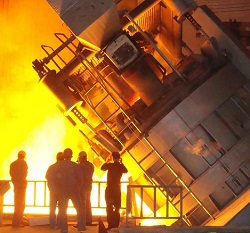
Image caption – “In the past, it was believed that graphite didn’t ‘like’ water, possibly because samples were always contaminated, which typically happens within 10 minutes,” says Haitao Liu. Courtesy of Martin Abegglen/Flickr.
More information: