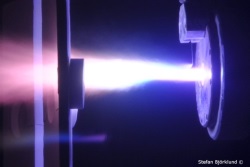
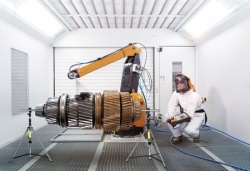
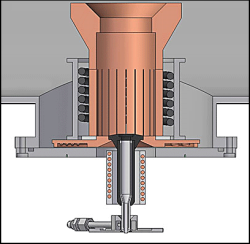
Researchers at University West in Sweden have developed a technology in which ceramic nanoparticles are suspended in a liquid and then plasma-sprayed. Called suspension plasma spray, the new technology is also significantly cheaper than the conventional technology, and the coating layer is said to last at least three times as long as a conventional coating.
Research at University West is conducted in close collaboration with aircraft engine manufacturer GKN Aerospace (formerly Volvo Aero) and Siemens Industrial Turbomachinery, which makes gas turbines. The idea is that the new layer will be used in both aircraft engines and gas turbines within two years.
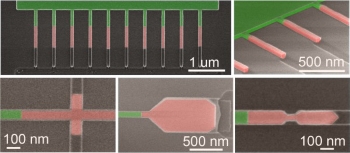
A conventional surface layer looks like a sandwich, with layer upon layer. The new surface layer can be compared more to standing columns. This makes the layer more flexible and easier to monitor. And it adheres to the metal, regardless of whether the surface is completely smooth or not. The most important thing is not the material itself, but how porous it is.
Dr Curry and his colleagues have since tested the new layer thousands of times in what are known as “thermal shock tests” to simulate the temperature changes in an aircraft engine. It has turned out that the new coating layer lasts at least three times as long as a conventional layer while it has low heat conduction abilities.