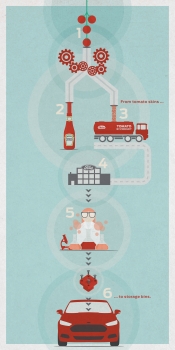
Researchers at Ford Motor Co., Dearborn, Mich., and H.J. Heinz Co., Pittsburgh, are investigating the use of tomato fibers in developing sustainable composite materials for use in vehicle manufacturing. Specifically, dried tomato skins could become vehicle wiring brackets or the storage bin a driver uses to hold coins and other small objects.
Nearly two years ago, Ford began collaborating with Heinz, The Coca-Cola Co., Nike Inc. and Procter & Gamble to accelerate development of a 100% plant-based plastic to be used to make everything from fabric to packaging and with a lower environmental impact than petroleum-based packaging materials currently in use. At Heinz, researchers were looking for ways to repurpose peels, stems, and seeds from the more than two million tons of tomatoes the company uses annually to produce its best-selling product: Heinz Ketchup. Company leaders contacted Ford.
“We are delighted that the technology has been validated,” says Vidhu Nagpal, associate director, packaging R&D for Heinz. “Although we are in the early stages of research and many questions remain, we are excited about the possibilities for both Heinz and Ford, and the advancement of sustainable 100% plant-based plastics.”
Image caption – Tomato fibers could be used to develop plant-based composite materials for use in automobiles.