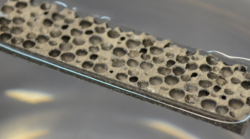
Researchers from Deep Springs Technology, Toledo, Ohio, and New York University Polytechnic School of Engineering have reportedly demonstrated a magnesium syntactic foam metal matrix composite with density so low that it can float on water. The magnesium matrix is reinforced with small silicon carbide hollow spheres and has a density of only 0.92 g/cc vs. 1.0 g/cc for water. In addition to its low density, it is strong enough to withstand the harsh conditions in the marine environment.
The syntactic foam made by DST and NYU captures the lightness of foams, but adds substantial strength. The secret of this syntactic foam starts with a matrix made of a magnesium alloy, which is then turned into foam by adding strong, lightweight silicon carbide hollow spheres developed and manufactured by DST. A single sphere’s shell can withstand pressure of over 25,000 psi before it ruptures—one hundred times the maximum pressure in a fire hose.
The hollow particles also offer impact protection to the syntactic foam because each shell acts like an energy absorber during its fracture. The composite can be customized for density and other properties by adding more or fewer shells into the metal matrix to fit the requirements of the application. This concept can also be used with other magnesium alloys that are non-flammable.
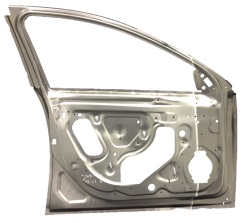
The new composite has potential applications in boat flooring, automobile parts, and buoyancy modules, as well as vehicle armor.
The authors recently published their findings in the International Journal of Impact Engineering. “Dynamic Properties of Silicon Carbide Hollow Particle Filled Magnesium Alloy (AZ91D) Matrix Syntactic Foams.” (http://www.sciencedirect.com/science/article/pii/S0734743X15000767).
The technology for the new composite is very close to maturation and could be put into prototypes for testing within three years. Amphibious vehicles such as the Ultra Heavy-lift Amphibious Connector (UHAC) being developed by the U.S. Marine Corps can especially benefit from the light weight and high buoyancy offered by the new syntactic foams, the researchers explained.
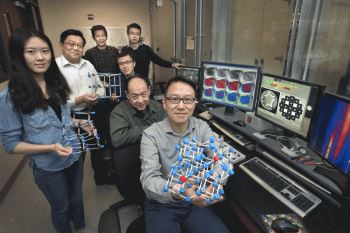
“This new development of very light metal matrix composites can swing the pendulum back in favor of metallic materials,” forecasts Nikhil Gupta, an NYU School of Engineering professor in the Department of Mechanical and Aerospace Engineering and the study’s co-author. “The ability of metals to withstand higher temperatures can be a huge advantage for these composites in engine and exhaust components, quite apart from structural parts.” This research is conducted in collaboration with the U.S. Army Research Laboratory.