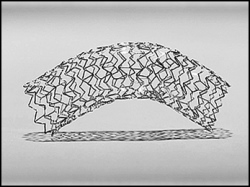
According to Norman Noble, Cleveland, Ohio, Design for Manufacturability and Concurrent Engineering can cut in half costs and time-to-market, while adding significant improvements to quality and delivery. In a recent white paper, the company says these services are most impactful when applied to projects that involve tight tolerances and exotic materials, including Nitinol. The company specializes in micromachining to very complex geometries with dimensional tolerances of +/-0.0001 in.
Product design contributes significantly to the overall cost of the finished medical device. As a result, medical device OEM’s that have the foresight to consider manufacturing and design issues upfront shorten their product development time, minimize development cost, and ensure a smooth transition into production for quick time-to-market.
Design for Manufacturability is the process of proactively designing products: (1) To use the most innovative and cost effective manufacturing methods, (2) To align the design specifications with the functional requirements and optimize the manufacturing functions, including: fabrication, finishing, testing, assembly and packaging, and (3) To use automation and validated processes to ensure the highest level of quality, regulatory compliance and speed-to-market.
Hand-in-hand with Design for Manufacturability is Concurrent Engineering, the practice of developing products and their manufacturing processes in simultaneous, parallel paths. If new processes are required for manufacturing, then the product and the process must be developed concurrently. Design for Manufacturability and Concurrent Engineering are proven design methodologies that work for any size company.
Read the complete white paper here: http://www.nnoble.com/News/DFMWhitePaper.pdf