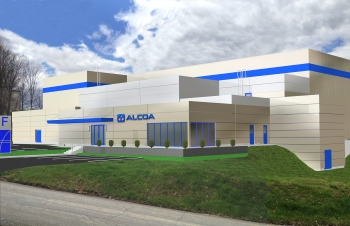
Alcoa, Pittsburgh, is expanding its R&D center in Pennsylvania to accelerate the development of advanced 3D-printing materials and processes. Alcoa will produce materials designed specifically for a range of additive technologies to meet increasing demand for complex, high-performance 3D-printed parts for aerospace and other high-growth markets such as automotive, medical and building and construction. The $60 million expansion is under construction at the Alcoa Technical Center, the world’s largest light metals research center near Pittsburgh.
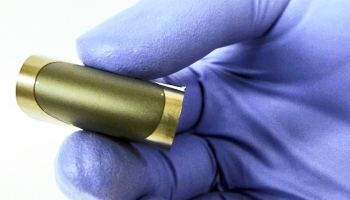
Demonstrating this integrated strategy, the company unveiled its Ampliforge process, a technique combining advanced materials, designs and additive and traditional manufacturing processes. Using the process, a near complete part is designed and 3D-printed, then it is treated using a traditional manufacturing process, such as forging. The process can enhance the properties of 3D-printed parts, such as increasing toughness and strength, versus parts made solely by additive manufacturing. Further, Ampliforge significantly reduces material input and simplifies production relative to traditional forging processes. Alcoa is piloting the technique in Pittsburgh and Cleveland.
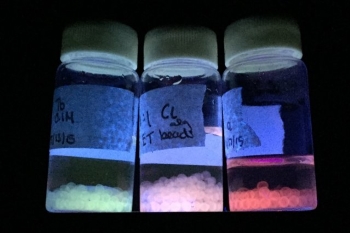
Alcoa’s material scientists will produce proprietary aluminum, titanium, and nickel powders designed specifically for 3D-printing. These powders will be tailored for various additive manufacturing processes to produce higher strength 3D-printed parts, and meet other quality and performance requirements. Alcoa has a long history in metal alloy and powder development, having invented over 90% of the aluminum alloys used in aerospace today and with a 100-year history in aluminum metal powder development for rocket fuel, paint, and other products.
The company will further its development of advanced 3D-printing design and manufacturing techniques—such as Alcoa’s Ampliforge process—to improve production speeds, reduce costs, and achieve geometries not possible through traditional methods. Direct production of 3D-printed metal parts represents a new way to manufacture aerospace components and requires a new suite of innovative design tools to realize its full potential. By connecting our materials scientists with our manufacturing experts, we enable a rapid development feedback loop to inform new software tools and processes that take full advantage of additive capabilities.
With the industry’s longest-running history of certifying aerospace components and qualifying processes, Alcoa will use its testing and process control expertise to overcome challenges with certifying new 3D-printed parts, starting with aerospace applications.
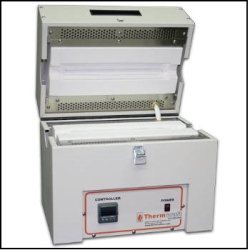
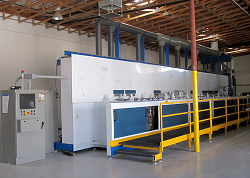
This expansion of the Alcoa Technical Center builds on Alcoa’s additive manufacturing capabilities in California, Georgia, Michigan, Pennsylvania, and Texas. The company has been creating 3D-printed tools, molds and prototypes for the past 20 years and owns and operates one of the world’s largest HIP (hot isostatic pressing) complexes in aerospace, a technology that strengthens the metallic structures of traditional and additive manufactured parts made of titanium and nickel based super-alloys. Through the recent RTI acquisition, Alcoa gained 3D printing capabilities in titanium, other specialty metals and plastics for the aerospace, oil and gas and medical markets. This expansion positions Alcoa to industrialize its advanced 3D printing capabilities across these and other manufacturing facilities.
Construction of the new facility is expected to be completed in the first quarter of 2016. The project will create more than 100 full-time positions—including materials specialists, design experts, and process and inspection technologists—by 2017 and approximately 45 temporary jobs during construction.
The Pennsylvania Department of Community & Economic Development, Westmoreland County, Upper Burrell Township and Burrell School District have agreed to support the project through a mixture of financial support and tax abatements, resulting in an estimated cost savings of up to $10 million.