One Minute Mentor: Metallurgy of Ferritic Stainless Steels
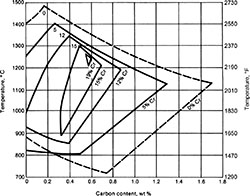
Chromium stabilizes the ferritic structure at high temperatures, but some austenite can form at high temperature in steels with 12% chromium and a low or medium percentage of carbon, as shown in the graph. The graph shows the effect of chromium additions on the extent of the austenite phase field in the iron-carbon system.
Carbon and nitrogen added together also produce about the same effect as carbon alone, which means that a fully ferritic stainless steel at elevated temperatures is not possible below 20% chromium without refining to remove carbon and nitrogen.
In addition, because chromium is a strong carbide former, the presence of carbon causes the formation of chromium carbides. This depletes the amount of dissolved (in solution) chromium that is needed to create the corrosion-resistant oxide layer of a stainless steel.
Volume 4D, Heat Treating of Irons and Steels ⇒ Heat Treated High-Alloy Steels ⇒ Heat Treating of Ferritic Stainless Steels ⇒ Metallurgy of Ferritic Stainless Steels