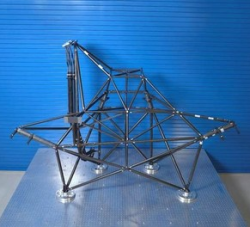
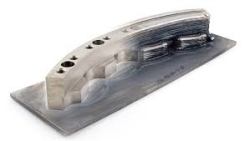
Space Systems Loral (SSL), Palo Alto, Calif., announces that it has successfully introduced additive manufacturing techniques for titanium and graphite structural components into its geostationary satellite platform. The highly optimized strut-truss antenna tower consists of 37 printed titanium nodes and more than 80 printed graphite struts. The strut-truss design methodology is now standard for SSL spacecraft, with 13 additional structures in various stages of design and manufacturing, and has resulted in SSL using hundreds of 3D printed titanium structural components per year.
Its first antenna tower designed through additive manufacturing was launched last December on the JCSAT-15 satellite, which was designed and built for SKY Perfect JSAT, a world leading satellite operator based in Japan. The satellite, renamed JCSAT-110A, has completed in orbit testing and is performing according to plan.
For SSL, optimizing at the system level with additive manufacturing has enabled an average of 50% reductions in mass and schedule for large and complex structures. The savings over conventionally manufactured structural assemblies is much greater than what is possible with the optimization of an individual part.
Since the launch of JCSAT-110A, SSL has completed assembly and testing on several other strut-truss structures and continues to expand its use of additive manufacturing and other next-generation design and manufacturing techniques.
“SSL is an innovative company that continues to evolve its highly reliable satellite platform with advanced technologies,” said Dr. Matteo Genna, chief technology officer and vice president of Product Strategy and Development at SSL. “Our advanced antenna tower structures enable us to build high performance satellites that would not be possible without tools such as 3D printing.”