Researchers from Rutgers University-New Brunswick, N.J., and members of the Critical Materials Institute in Ames, Iowa, announce that they have found a possible new source of rare earth elements in phosphate rock waste, and have developed an environmentally friendly way to extract the elements. Results of their study were published in the Journal of Chemical Thermodynamics.
The research team explored using mineral and organic acids, including a bio-acid mixture, to extract six rare earth elements (yttrium, cerium, neodymium, samarium, europium, and ytterbium) from synthetic phosphogypsum. Scientists led by David Reed at Idaho National Laboratory produced the bio-acid mixture by growing the bacteria Gluconobacter oxydans on glucose. This bio-acid mixture consists primarily of gluconic acid, which is found naturally in fruits and honey.
The results suggest that the bio-acid did a better job of extracting rare earth elements than pure gluconic acid at the same pH (2.1), or degree of acidity. The mineral acids (sulfuric and phosphoric) failed to extract any rare earth elements in that scenario. When the four acids were tested at the same concentration, only sulfuric acid was more effective than the bio-acid.
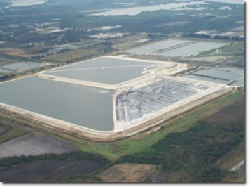
Each year, an estimated 250 million tons of phosphate rock are mined to produce phosphoric acid for fertilizers. In the United States, approximately 28 million metric tons were mined in 2017. Rare earth elements generally amount to less than 0.1 percent in phosphate rock. But worldwide, about 100,000 tons of these elements per year end up in phosphogypsum waste. That’s almost as much as the approximately 126,000 tons of rare earth oxides produced worldwide each year.