Researchers at NASA Glenn Research Laboratory, Cleveland, have partnered with Boeing to test how shape-memory alloys can be used in deployable vortex generators (VGs), the tiny fins on airplane wings that help control airflow during flight.
Right now, most VGs on airplanes are static. They are fixed devices always present in the airstream to improve performance during takeoff, landing and irregular conditions. However, innovations with shape-memory alloys allow development of VGs that move when they sense a change in the environment. This advancement will make airplanes of the future capable of adjusting in response to changes in temperature, altitude, and airspeed, making them more adaptive and more like birds.
Materials Research Engineer and ASM International’s SMST Society President Dr. Othmane Benafan is part of the team at Glenn developing the shape-memory alloy parts that have been installed on Boeing’s ecoDemonstrator 777. This flying test bed evaluates promising technologies that can solve real-world challenges for airlines, passengers and the environment.
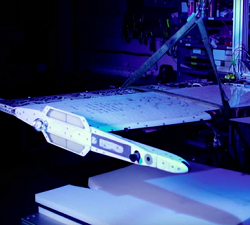
The alloy pieces are small metal rods that are inserted along the hinge line of a VG where it connects to the aircraft wing. As the shape-memory alloy cools off, it twists. And this twisting motion pulls the fin down to lie flat against the wing. Then as the aircraft moves into warmer conditions, the alloy retracts to its original shape, lifting the fin into an upright position.
“There are no heaters, no coolers,” says Dr. Benafan. “The alloys are tuned exactly to environmental temperatures. They sense, and then they do their thing.”
Much more information and many more photos will be published in the April issue of SMST Newswire.