Metallisation Limited, West Midlands, U.K., released a new tutorial titled “Arc Spray vs. Flame Spray: What’s the Difference?” on its website. It looks at some of the major similarities and differences between arc spray and flame spray processes, two thermal or metal spray processes commonly suitable for the same application.
Flame Spraying uses heat generated from the combustion of a mixture of oxygen and a fuel gas, commonly oxy/propane or oxy/acetylene. This gas mixture is ignited to produce a flame that heats the consumable, either a wire or powder. The molten material is atomized and sprayed to build up a coating layer.
Arc spraying uses an electric arc as a heat source to melt metallic wires. Similarly to flame spraying, compressed air (or sometimes inert gas) is used to atomize molten metal. The electric arc is created by charging one wire positive, another wire negative, and forcing the two wires together to create an electric arc. The process is sometimes referred to as twin wire arc spraying.
The tutorial compares capital costs and operating costs, amount of material able to be sprayed, spray rates, and highlights other technical, application-specific, and personal preferences. It also covers their uses to better understand when either process is needed.
More tutorials are also available on the Metallisation website.
For more information:
Metallisation
https://www.metallisation.com/
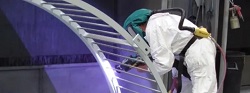
Image – The arc spray process in action. Courtesy of Metallisation.