Sol-gel processing is a chemical engineering technique to manufacture ceramic powders, especially oxides. The term sol refers to the initial solution of the chemical components from which the final powder will eventually be derived. Gel is a term used to describe the final product of the ceramic material. The methods are based on mixing solutions that enable reactions for the formation of distinct particles. The particles are not precipitated from solution; rather, the mechanism of particle production is based on colloidal science in which the particles are suspended in the liquid. Typical ceramic powders that are produced by this technique include chromia, alumina, cobalt ferrite, and stabilized zirconias.
The most broadly used synthetic technique for bulk metal oxides has been the ceramic method, which is based on the direct reaction of powder mixtures. The diffusion of the atomic or ionic species is controlled through the reactants and products. These solid-state processes require high temperature and small particle sizes to bring the reaction partners sufficiently close together and to provide high mobility. The reaction conditions lead to thermodynamically stable phases, preventing the formation of metastable solids. There are various products that can be collected from the sol-gel process which depend on the synthesizing route.
Sol-gel procedures were successful in the preparation of bulk metal oxides (e.g., ceramics, glasses, films, and fibers) and therefore, they have been applied for nanoparticle synthesis. Liquid-phase routes represent the most promising alternatives for the size- and shape-controlled synthesis of nanoparticles. The number of oxide nanoparticles obtained by sol-gel chemistry is small compared to the variety of compounds obtained via powder routes.
A synthesis protocol developed for a bulk metal oxide could not be directly accommodated to its corresponding counterpart on the nanoscale. Aqueous sol-gel chemistry is complex due to the high reactivity of the metal oxide precursors toward water and the double role of water as ligand and solvent. There are many reaction parameters that must be controlled (e.g., hydrolysis and condensation rate of the metal oxide precursors; the pH and temperature; the method of mixing; the rate of oxidation; and the nature and concentration of anions) to provide good reproducibility of the synthesis protocol.
Another fundamental problem of aqueous sol-gel chemistry is that the as-synthesized precipitates are generally amorphous. The required post-synthetic annealing step to induce the crystallization process prevents fine control over crystal size and shape. For the preparation of bulk metal oxides, these limitations play only a minor role, but for nanoparticle synthesis, they are major issues.
Nonaqueous (or nonhydrolytic) sol-gel processes in organic solvents are able to overcome some of the major limitations of aqueous systems. The advantages are a direct consequence of the role of the organic components in the reaction system that act as a solvent, an organic ligand of the precursor molecule, or a surfactant that enables chemical reaction, or permit the in situ formation of organic condensation products. The organic components behave as an oxygen supplier for oxide formation and determine strongly the particle size and shape as well as the surface properties due to their coordination properties. However, they moderate reactivity of the oxygen-to-carbon bond, which results in slower reaction rates.
The nonaqueous synthesis routes yield metal oxide nanoparticles with uniform, yet complex crystal morphologies with crystallite sizes of just a few nanometers, and good dispersibility in the organic phase. The chemistry of the oxygen-carbon bond is well known from organic chemistry, a significant fact considering the fundamental role of organic reaction pathways in nonaqueous sol-gel chemistry. In parallel to the formation of the inorganic nanoparticles, the organic species undergo transformation reactions. It is possible to correlate the processes leading to these organic species by analyzing the growth mechanisms of the oxide nanoparticles.
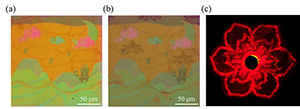
Image – Various final products obtained from the sol-gel process.
This information is from ASM Handbooks Online, Vol. 5A: Thermal Spray Technology, Coating Structures, Properties, and Materials. To find this information (subscription required), click on the link below and scroll down to Figure 5.