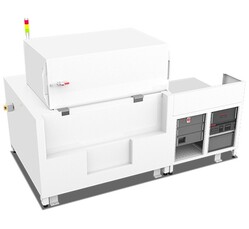
Sigray, Concord, Calif., released the first commercial x-ray assisted device alteration (XADA) tool that enables circuit debugging of emerging backside power delivery (BPD) architectures.
X-ray assisted device alteration (XADA) is the x-ray equivalent of laser assisted device alteration (LADA). In XADA, a highly focused, high flux density beam of x-rays induces a perceptible time delay in circuits to rapidly isolate critical signal paths (“speedpaths”). Sigray’s XADA-200 is a critically needed solution for circuit debugging in for emerging backside power delivery (BPD) schemes, in which the power lines are moved to the backside of the device.
BPD is largely considered to be the future of integrated circuit design, enabling improved efficiency and speed for high performance chips in automobiles, mobile devices, and AI-processing. The challenge is that BPD obsoletes LADA because devices can no longer simply be thinned on the backside to allow a NIR laser to penetrate and induce a photoelectric current (or locally heat). By virtue of the penetrating power of X-rays, XADA not only enables circuit debugging in new BPD devices but also requires little to no sample preparation (e.g., backside thinning).
XADA’s small probe size is enabled by patented and patent-pending innovations in x-ray source and x-ray optics technologies.
The systems have these key advantages:
- Demonstrated ability to induce time delays in circuits
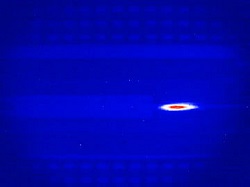
- Microns-scale x-ray probing at high flux density
- Achieve down to single digit microns (1-5 µm)
- Designed for testers
- Designed from the ground up for maximum flexibility in accommodating a wide variety of testers.
Sigray is the world leader in x-ray optics and has developed fabrication capabilities under several large government grants over the past decade. The company now supplies its x-ray focusing optics to most of the synchrotron facilities. Due to its heavy R&D investment in x-ray optics, Sigray is the only company in the world that can fabricate double paraboloidal x-ray optics with stringent straightness and surface profile tolerance requirements needed for XADA. Optics used for XADA are fabricated through a patent-pending process that maximizes symmetry and minimizes slope errors. Additional patent-pending innovations in x-ray source and optics are expected to enable Sigray XADA probes to submicron spot sizes in the future.
Using X-rays, 3-4 ps shifts in circuit delays can be seen.
Sigray collaborated with industrial thought leaders to develop a system with a large and flexible tester area (to accommodate a wide variety of different tester designs). Because tester cables can be expensive, the system was also designed with large cable runs to minimize the cable lengths needed and to enable testers to be moved into and out of the XADA unit without needing to disconnect the cables.
For more information:
Sigray