Constellium, Paris, announced the successful completion of the “ISA3” R&D project, an initiative launched in 2021 to advance lightweight aluminium solutions for automotive applications. Conducted in collaboration with Renault Group, ESI Group, the Institut de Soudure, and the University of Lorraine, the project was supported by a grant from the France Relance investment program. The research focused on developing cost-efficient, recyclable aluminium components to enhance vehicle performance and sustainability.
A key achievement of the project was the development of a lightweight aluminium door in partnership with Renault. Utilizing Constellium’s proprietary uni-alloy 6xxx rolled and extrusion-based solutions, the door design achieved a 14% weight reduction compared to existing aluminium doors used in compact battery electric vehicles. By employing a single alloy series, the project streamlined closed-loop recycling, reducing the door’s overall carbon footprint. This innovation resulted in a 33% reduction in Global Warming Potential (GWP), reinforcing the project’s emphasis on sustainability.
Beyond material advancements, the project also explored more efficient and flexible production processes to enhance performance while optimizing costs. Ludovic Piquier, senior vice president, manufacturing excellence and chief technical officer at Constellium, emphasized that the results highlight the company’s commitment to providing sustainable, high-performance aluminium solutions for the automotive sector.
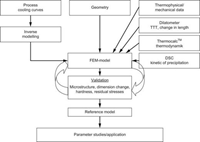
Patrice Belliard, expert in flat products at Renault Group, noted that the project demonstrated how aluminium can support both weight reduction and cost efficiency in automotive manufacturing. Mathilde Chabin, manufacturing product director at ESI Group, added that the use of advanced pre-certification and validation technologies eliminated the need for physical prototypes, accelerating innovation while reducing costs and environmental impact.
The completion of Project ISA3 underscores the potential of aluminium to contribute to the automotive industry’s decarbonization efforts while delivering economic and environmental benefits.