
Web Content Display

Principles of Failure Analysis, 3 day, December 11-13, 2023, Virtual Only
Classroom Course | Product code: I-00022404 |
$2,200.00Member Price:$2,000.00
SEATS AVAILABLE More information about this course
Description
This course is best taken in conjunction with the How to Organize and Run a Failure Investigation course.
This course provides the knowledge to bridge the gap between theory and practice of failure analysis. A very practical approach to failure analysis is provided for those who are new to the field or those who want an update. It is also designed for technicians with the pre-requisites and those interested in understanding how knowledge of failure analysis can lead to better productivity. Causes of fractures are explained with diagrams of stress application and distribution. Many case histories of failures and their elimination are highlighted throughout the course.
WHO SHOULD ATTEND:
- Degreed engineers who are new to failure analysis or for those who want an update
- Technicians with at least five years experience full-time in a failure analysis lab and who have knowledge of how to prepare and interpret microstructures and how to perform basic mechanical tests
LEARNING OBJECTIVES:
Upon completion of this course, you should be able to:
- Describe general procedures, techniques and precautions in failure analysis
- Recognize how stress systems relate to fracture of ductile and brittle materials
- Identify typical fatigue, wear, corrosion and elevated-temperature failure characteristics
Continuing Education Units: 2.0
- General Procedures for Failure Analysis
- Fatigue Failures
- Wear Failures
- Corrosion Failures
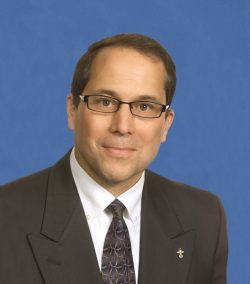 Daniel P. Dennies, PhD, FASM is a licensed metallurgical Professional Engineer (P.E.) in the state of California. Dr. Dennies has over 35 years of experience in various raw material, forging, aerospace, and aircraft related industries as a technical specialist, technical manager, and program manager. The majority of his career has been in the aerospace industry working on projects such as the Space Shuttle Main Engine, the National Launch System, the National Aerospace Plane, expendable launch systems like Delta and Titan, and the International Space Station. He has also worked on other projects including commercial aircraft such as the Boeing 787, military aircraft such as the C17 Transport and B1-B Bomber, proprietary programs such as the Ground Based Missile Defense and the X-37B Experimental Reusable Unmanned Space Plane. Dr. Dennies broadened his manufacturing experience and industrial knowledge by working in the forging industry and the raw material industry. In addition he has worked on projects concerning the biomedical devices, fasteners and energy industries.
Dr. Dennies has accumulated experience with a wide variety of materials, processes and test mechanisms through his association with the design, testing, failure analysis, and manufacturing aspects of these programs. His broad areas of expertise include failure analysis, engineering design support, material and process selection, material testing, customer or supplier interaction, and program development and management. He is a member of multiple professional organizations, where he has served on the board of trustees and several national committees, many as chairman. He has over 10 professional awards and was awarded a patent in 1988. Dr. Dennies has taught multiple courses a year since 2000, has given numerous technical presentations, and is highly published. He authored the books “How to Organize and Run a Failure Investigation” and “Robot Wars in the City of Materials.”
He has been a member of ASMI for 37 years and is a 2002 ASM Fellow. He is also the recipient of the 2004 Allan Ray Putman Award and the 2011 George Roberts Award. Dan received the 2005 Orange County Engineering Council Prestigious Engineering Achievement Award and is a honoree of the coveted NASA Silver Snoopy Award. He was a founding Materials Mentor for the Eisenman Materials Camp for Students in 2000 and has attended a Materials Camp as a Materials Mentor each year since. He has been the coordinator and master teacher for Teachers Materials Camp in LA since 2004. Dan is active on the local level as member of the LA Chapter executive board and the national level on various ASMI national committees. Dr. Dennies is a past Board of Trustee for both the ASMI Materials Education Foundation and Society.
Venue: Virtual Classroom
Location:
Virtual Classroom
This course will be held through ASM’s Virtual Classroom. No travel is required to experience the exceptional content offered by this course. This virtual classroom incorporates live learning and the flexibility to engage with the instructor and students through creative outlets, such as using overhead cameras to display specimens. Breakout rooms will be offered to students in specific courses to collaborate and discuss any of the material being taught. By choosing to go virtual, all the essential features expected from a normal classroom will be available to you with ease.
SPECIAL CLASS HOURS: 9:30 am – 5:00 pm (Eastern Standard Time)
COMMUNICATION: Access to course materials requires a unique email address for the student enrolled. All communications concerning the status of the class will be accomplished by email. It is the responsibility of the class registrant to ensure that a valid email address has been supplied and email filter settings are not preventing delivery of emails from ASM International-email. A meeting link will be emailed, one week prior to the start of class.
If you have any questions, please contact ASM International Member Service Center (440.671.3800 or [email protected])
REGISTRATION FEES: Any unpaid registrations MUST be paid in full on or before the first day of class.
COURSE CANCELLATION: ASM International reserves the right to cancel any class; refunding registration fees, if necessary without additional financial obligation. In the event it is necessary for ASM to cancel a class, email notification will be sent no less than two weeks prior to the class starting date.
It is the responsibility of the class registrant to ensure that a valid email address has been supplied and email filter settings are not preventing delivery of emails from ASM International—email communications will be the primary channel of communications leading up to the start of classes.
For additional information, please see the ASM Education Cancellation Policy for description of fees and policy on registration cancellation.
The Mechanisms of Metallurgical Failure: The Origin of Fracture
| Published: December 01, 2020 | Author(s): John Campbell
ASM How To Organize & Run A Failure Investigation Online Course
| Published: December 01, 2020 | Author(s): John Campbell
Advanced Fracture Mechanics and Structural Integrity
| Published: May 31, 2019 | Author(s): Ashok Saxena
RELATED FROM ASM
LEARNING AND PROFESSIONAL DEVELOPMENT

Practical Fractography, December 4-5, 2024, Virtual Only
Aug 23, 1970 - Aug 23, 1970
Mr. Dave Christie
Virtual Classroom
, ,

How to Organize and Run a Failure Investigation, February 3-5, 2025, Virtual Only
Aug 23, 1970 - Aug 23, 1970
Daniel P. Dennies, PhD, FASM
Virtual Classroom
, ,

Principles of Failure Analysis, 4 day, February 26-29, 2024
Aug 23, 1970 - Aug 23, 1970
Mr. Ron Parrington, P.E., FASM
ASM International World Headquarters - Materials Park
Novelty, OH, United States