One Minute Mentor: Hardness Gradients in Nitrided High-Speed Tool Steel

March 4, 2016
Source:

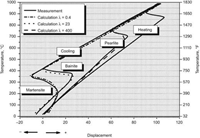
The graph shows the effect of bath conditions and immersion time on hardness gradients in Type T1 high-speed tool steel.

It compares the hardness gradients obtained on specimens of T1 high-speed steel nitrided at 565°C (1050°C) for 90 minutes in a new bath and for various lengths of time in an aged bath. Nitriding of decarburized high-speed steel tools should be avoided because it results in a brittle surface condition. For those surfaces that have been softened from grinding, nitriding is frequently employed as an offsetting corrective measure.

Volume 4D, Heat Treating of Irons and Steels â‡’ Tool Steels â‡’ Heat Treating of High-Speed Tool Steels â‡’ Recommended Heat-Treating Procedures

The graph shows the effect of bath conditions and immersion time on hardness gradients in Type T1 high-speed tool steel.

It compares the hardness gradients obtained on specimens of T1 high-speed steel nitrided at 565°C (1050°C) for 90 minutes in a new bath and for various lengths of time in an aged bath. Nitriding of decarburized high-speed steel tools should be avoided because it results in a brittle surface condition. For those surfaces that have been softened from grinding, nitriding is frequently employed as an offsetting corrective measure.

Volume 4D, Heat Treating of Irons and Steels ? Tool Steels ? Heat Treating of High-Speed Tool Steels ? Recommended Heat-Treating Procedures
Recommended Posts