Researchers at the Fraunhofer Institute, Germany, have reportedly developed load-bearing, biodegradable implants made of a composite of iron reinforced with tricalcium phosphate (TCP), which stimulates the healing process of the bone. Iron alloys corrode slowly and ensure high mechanical strength, while TCP ceramic decomposes quickly, stimulates bone growth, and aids the ingrowth of the implant.
These materials are to be gradually absorbed by the body while, at the same time, new bone tissue is formed. Ideally, the degree of degradation is adapted to the bone growth so that the degradation of the implant meshes with the bone formation. For this reason, the scientists are developing materials with specifically adjustable degradation. The challenge: The implants have to be mechanically stable enough during the entire healing process so that they are able to fix the bone in place. At the same time, they cannot have any allergenic effects or cause inflammation.
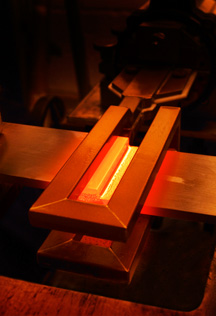
To manufacture the composite, the researchers have turned to the powder injection molding process. It offers the ability to produce complex structures cost-effectively and in large numbers. Properties such as density and porosity can be controlled selectively – an important factor, since high density and low porosity result in high mechanical strengths. Another advantage: The materials are available as powders and can be mixed in any proportion prior to processing.
In laboratory experiments, the researchers have found the optimum composition of the materials for the suture anchor. The demonstrator consists of 60% iron and 40% ceramic. The researchers have succeeded in doubling the degradation rate from 120 to 240 micrometers per year in the laboratory model.
While shaping processes such as powder injection molding are especially suited in large quantities as fixation elements for standard implants, additive manufacturing methods are used to produce individual implants – such as for bone replacement in the skull area – or implants with defined pore structure. The researchers from ILT who are also involved in the project are producing implants made of magnesium alloys through the use of Selective Laser Melting (SLM).
http://www.fraunhofer.de/en.html