TenCate Advanced Composites North America, Fairfield, Ca., developed a heat resistant composite for the heat shield and backshell structure of the Lockheed Martin Orion multi-purpose crew vehicle. The vehicle was successfully launched in December. The suite of advanced materials in the space capsule replace the traditional titanium solution for re-entry and splashdown requirements and also reduce weight and cost. The heat shield design allows very large composite structures to be fabricated out of autoclave.
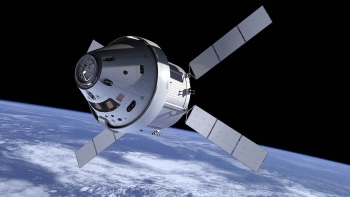
Lockheed Martin Space Systems Orion thermal protection group worked closely with TenCate Advanced Composites to develop a special heat resistant composite resin for the 16.5 ft (5 m) diameter heat shield and the crew vehicle backshell structure of the Orion space capsule.
The successful launch of NASA’s Orion multi-purpose crew vehicle represents the efforts, innovation, and teamwork of many individuals and companies involved. Steve Mead, VP of marketing & sales at TenCate Advanced Composites says: “This week’s flight represents the culmination of a five year development and qualification effort for a suite of materials used in this extreme application. Further, as a result of the heat shield’s large size and thickness, the advanced composites used had to achieve high consolidation using only a low pressure vacuum bag only process. TenCate is honored to be one of Lockheed’s partners on this important space program.”
Image caption — NASA’s Orion spacecraft will carry astronauts further into space than ever before using a module based on Europe’s Automated Transfer Vehicles (ATV). The ATV-derived service module, sitting directly below Orion’s crew capsule, will provide propulsion, power, thermal control, as well as supplying water and gas to the astronauts in the habitable module. The first Orion mission will be an uncrewed lunar flyby in 2017, returning to Earth’s atmosphere at 11 km/s—the fastest reentry ever.