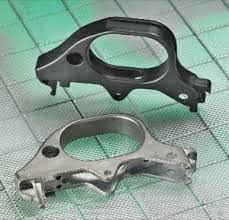
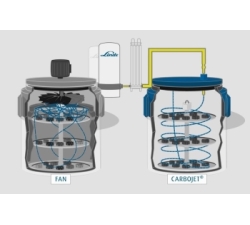
Linde North America Inc., Murray Hill, N.J., and Megamet Solid Metals, Earth City, Mo., a custom metal-injection-molding company, have shown that the quality of metal-injection-molded parts could be significantly enhanced by following Linde’s advanced Sinterflex atmosphere control system. The system maintains the low CO+H2 concentration atmosphere necessary to stabilize carbon potential.
Using Linde’s advance control system, Megamet was able to reduce the standard deviation of the carbon content in MIM parts. The Linde system also helps to reduce rejects and prevent rework due to carbon content variation, boost productivity, and increase the number of parts that are in specification.
According to Bruce G. Dionne, General Manager of Megamet Solid Metals, “Homogeneity and consistency in the furnace atmosphere are pivotal to the success of MIM manufacturing. The highest-accuracy carbon control is achieved by regulating the carbon potential at the sintering temperature to the value that will lead to the needed final surface carbon concentration in the sinter body upon cooling.”
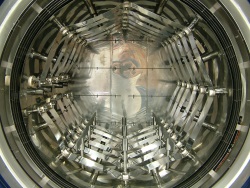
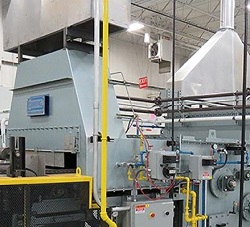
When compared to other manufacturing processes such as CNC machining and casting, MIM is a cost-effective option. This powder metal process provides the durability and strength of metals, along with the advantages of plastic-injection molding. In MIM, the final step is sintering, which is a high-temperature hardening process. This process is performed in a controlled atmosphere, and it involves application of heat below the melting point, which causes the high-density alloyed powders to fuse. During the sintering process, decarburization is avoided by the MIM parts due to the carbon-neutral atmosphere. Decarburization prevents the carbon content from meeting the specification.