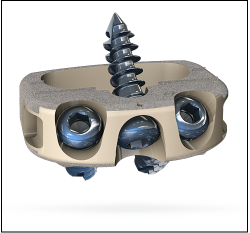
Centinel Spine, West Chester, Pa., has developed Ti-Active titanium plasma spray coatings on polyetheretherketone implants. The coating enhances the PEEK implants by providing an integrated microporous titanium surface designed to increase the coefficient of friction for enhanced insertion stability. The coating also enables cellular attachment and proliferation to maximize opportunities for fusion.
Retrospective studies show clinically favorable outcomes for hip stems with plasma spray titanium coatings that result in excellent bony on-growth and long-term stability. Recent literature shows that 100% titanium interbody cages have more cellular attachment and proliferation properties than traditional PEEK cages. However, all-titanium cages have a higher modulus of elasticity and an increased risk of subsidence.
Built on over 15 years of science and experience, Centinel Spine engineered the Ti-Active technology to merge the translucent and biomechanical advantages of PEEK with the hydrophilic and cell-friendly properties of titanium. Ti-Active devices are 20 times rougher than uncoated PEEK devices, and the 3D topography increases the surface area in contact with the bony endplates, maximizing the potential for fusion.
“When titanium is added to the PEEK implant it makes the implant easier for cells to adhere and proliferate,” says Celeste Abjornson, Ph.D., project coordinator with the Integrated Spine Research Programs at Hospital for Special Surgery in New York City. These scientists recently published a paper examining the different roughness profiles of titanium coatings. They reported that when the titanium coating achieves the right roughness, the cells are able to express different growth factors and proteins.