Women in Engineering Profile: Margaret Flury
This profile series introduces leading materials scientists from around the world who happen to be females. Here we speak with Margaret Flury, principal materials engineer at Medtronic.
 What does your typical workday look like?
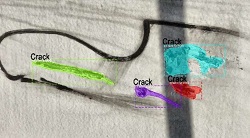
I do failure analysis for Medtronic’s restorative therapies group. We examine everything from technology and development prototypes to manufacturing items to returned product (not a majority of our work!). We can look at individual parts, whole devices, or even systems. I love to be in the lab, examining the failed items and setting up testing to try to recreate the failures. Of course I do have to spend some time writing reports and attending project meetings as well.
What part of your job do you like most?
Definitely working in the lab—I love dissecting failed parts, experimenting, using a lot of fun technical equipment, and trying to figure out what happened to make the item fail. I’ve even been able to participate in a few animal studies. I love interacting with the project team members to learn the history of the item and what it was exposed to. It is amazing what you can learn when there are so many different perspectives on an issue.
What do you least like to do?
Check emails. When I returned from maternity leave, I had over 900 to go through.
What is your engineering background?
I went to college at Michigan Technological University and received my B.S. in materials science and engineering. From there, I worked for Engel Metallurgical, an independent consulting and testing engineering firm where I did failure analysis and materials testing. We had clients from pretty much every type of industry, attorneys, and insurance companies. While at Engel, I obtained my Professional Engineer license in the state of Minnesota.
Upon moving to Medtronic, I started in the neuromodulation materials engineering group. I did a lot of product development work, where my focus was ensuring that the materials selected were both biocompatible (the materials don’t harm the body) and biostable (the body doesn’t harm the materials), all while having the desired properties for the function. After a few years, a position opened up in the neuromodulation failure analysis group, and I jumped on it, as my passion is failure analysis. With an internal business reorganization, neuromodulation became the restorative therapies group, and we became exposed to more product lines, enhancing the fun.
What attracted you to engineering?
I got quite a few scholarships to attend Michigan Tech, so I gave in to my parents and finally visited the campus. Luckily I fell in love with the school and decided to attend. I actually first applied to their liberal arts program. After deciding to attend and realizing they are better known for engineering, and because I liked math and science in high school, I switched my major to engineering. On the 10-hour drive to Michigan Tech to move in, I asked my mom what an engineer actually did. I was a bit clueless, but smart enough to take a general engineering course to learn what the different kinds of engineers do. One of my friends was majoring in materials engineering and encouraged me to check it out further. I talked to the academic advisor and learned that you could pretty much work in any industry. I liked that I could choose a major without really deciding that I was going to design cars or bridges for the rest of my life. I’m so happy with my choice and still love the wide variety of industries I can work for.
If a young person approached you for career advice about pursuing engineering, what would you tell them?
Find an area that you really like or are passionate about working in. Engineering is a lot of hard work, but if you like what you are doing, it turns out to be a lot of fun work. Also, talk to as many people you can in the field you are interested in—about what they do and about themselves. You never know when a new friend will become a great contact for help, references, jobs, work, or anything else. Not only does having personal connections make it easier to find what you need, it also makes your work a lot more fun.
Hobbies?
Running, playing with our daughter Nora and our dog Walter, fishing.
Last book read?
“Sherlock Holmes and the Case of the Brash Blonde” – I’m a sucker for super cheesy chick lit mysteries. They are quick, easy, mindless reads. Also, “Ina May’s Guide to Childbirth.” My husband and I had our first child in December 2016, so I thought I’d prepare a little. That was a while ago. After she was born, I didn’t have much time to read!
Do you know someone who should be featured in an upcoming Women in Engineering profile? Contact Vicki Burt at [email protected].