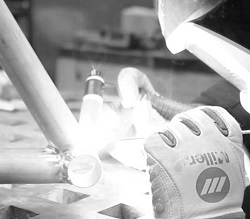
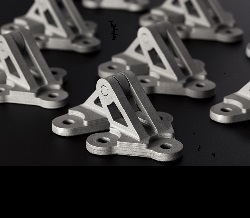
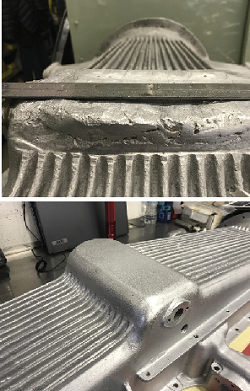
Engineers at the UCLA Samueli School of Engineering announce that they have developed a way to weld aluminum alloy AA 7075 by infusing titanium carbide nanoparticles into welding wires, which results in welded joints with a tensile strength up to 392 MPa. (By comparison, AA 6061 has a tensile strength of 186 MPa in welded joints.) According to the study, post-welding heat treatments could further increase the strength of AA 7075 joints up to 551 MPa, which is comparable to steel.
“The new technique is just a simple twist, but it could allow widespread use of this high-strength aluminum alloy in mass-produced products such as cars or bicycles, where parts are often assembled together,” said Xiaochun Li, UCLA’s Raytheon Professor of Manufacturing and the study’s principal investigator. “Companies could use the same processes and equipment they already have to incorporate this super-strong aluminum alloy into their manufacturing processes, and their products could be lighter and more energy efficient, while still retaining their strength.”
The researchers already are working with a bicycle manufacturer on prototype bike frames that would use the alloy; and the new study suggests that nanoparticle-infused filler wires could also make it easier to join other hard-to-weld metals and metal alloys.
“Nanoparticle-enabled phase control for arc welding of unweldable aluminum alloy 7075,” was published in the January 9 issue of Nature Communications.