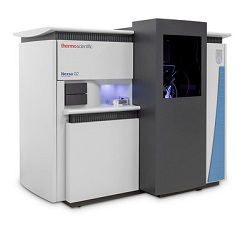
Thermo Fisher Scientific, Hillsboro, Ore. , announced the Thermo Scientific Nexsa G2 surface analysis system — a fully automated x-ray photoelectron spectrometer (XPS) designed to increase productivity and innovation for academic and industrial labs.
The Nexsa G2 delivers significant software and hardware improvements that enable researchers to uncover comprehensive insights into surface chemistry to understand the composition of microelectronics, ultra-thin films and nanotechnologies—enabling them to accelerate their research on items such as batteries, semiconductors, polymers and catalysis.
It also offers the potential for product advancements through greater sample throughput and correlative analysis compared to the previous Nexsa model. Compared to the previous Nexsa model, this instrument’s improved sensitivity detects weak signals below 0.1% more easily and produces reliable, high-quality data, enhancing the development and safety of a variety of products, including next generation batteries and medical implants. Software improvements and improved automation enable users to strengthen data integrity with robust results and fast sample acquisition, and easily correlate information obtained from a range of integrated analysis techniques.
The Nexsa G2 delivers several features that researchers need for quality surface analysis in one solution, including:
- Integration of multiple analytical techniques, including a Raman spectroscopy option unique to Nexsa systems.
- Sample heating and electrical biasing.
- Next generation Thermo Scientific Avantage Data Software for easy instrument control, accurate data acquisition and processing, and flexible reporting functions, allowing researchers to focus on results rather than data collection processes.
- A MAGCIS dual beam ion source that facilitates depth profile analysis of soft and hard materials using gas cluster or monatomic ions, to minimize surface damage and enable research on a wide collection of materials.
- Automation that facilitates remote access and operation, providing global collaboration and socially distanced discovery.
For more information:
Thermo Fisher Scientific
www.thermofisher.com