University of Pittsburgh researchers recently received another $1.5 million from the National Science Foundation to continue a combined multi-university, private-industry effort to develop implantable medical devices made from biodegradable alloys based on magnesium. The consortium seeks to design devices that can adapt to changes in a patient’s body and dissolve after the injury has healed.
This would reduce the follow-up procedures and potential complications of major orthopedic, craniofacial, and cardiovascular procedures, and spare millions of patients worldwide added pain and medical expenses.
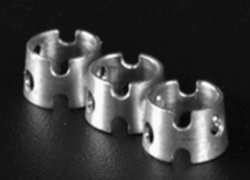
The Engineering Research Center for Revolutionizing Metallic Biomaterials has designed anterior cruciate ligament rings made of biodegradable metals—usually magnesium based. They are not new, having been originally considered in the late 19th century. But, says Pitt’s William Wagner, deputy director of the project and a principal investigator, “the question comes when you start to design medical devices for a specific application and a clinical partner says, ‘We want that to be gone in a month, or a month-and-a-half, or we want that to be there for a year.'” Then you have to figure out how to meet those specifications, he says.
To that end, the Pitt team as well as collaborators at the University of Cincinnati (UC) and North Carolina Agricultural and Technical State University (N.C. A&T) are creating new alloys and new manufacturing processes that suit clinical demands. The consortium seeks to design devices that can adapt to changes in a patient’s body and dissolve once healing has occurred, reducing the follow-up procedures and potential complications of major orthopedic, craniofacial, and cardiovascular procedures and sparing millions of patients worldwide added pain and medical expenses.
http://www.news.pitt.edu/news/creating-medical-devices-dissolving-metal