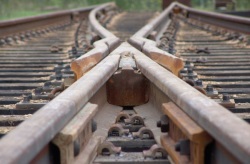
The University of Huddersfield, England, announces that its researchers will take part in a new $3 million railway steel development project backed by major funding groups. The Rail Safety and Standards Board (RSSB) and the Engineering and Physical Sciences Research Council (EPSRC) have combined to provide funds for three linked programs of research into new materials that will reduce heavy maintenance and renewal costs for rail tracks.
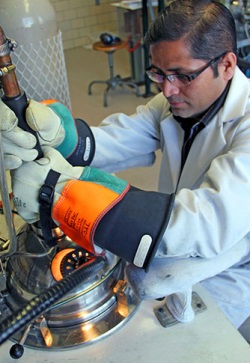
The university is home to the Institute of Railway Research (IRR), which has a multi-national team of experts based in specially equipped labs. It formed a consortium that was joined by three other universities, including Cambridge, Leeds and Cranfield, to bid for a share of the RSSB and EPSRC funding.
A panel of leading industrial and academic figures appraised the IRR-led consortium’s proposal and then gave the go-ahead to a two-year investigation into developing a fundamental understanding of how different characteristics of steel microstructures respond to rail-wheel contact conditions. This understanding will establish the design rules for the optimum rail steel microstructure that is best at resisting degradation resulting from the contact between wheel and rail.
The Principal Investigator for the project is Dr. Adam Bevan, the IRR’s Head of Enterprise. Technical leadership will also be provided by Dr. Jay Jaiswal, a Visiting Professor at the IRR and a leading metallurgist specializing in rail materials. He has held important research posts with British Steel, Corus, and Tata Steel.
Professor Jaiswal previously contributed to the development two patented high-performance steels currently produced by Tata Steel for railway tracks. He is convinced that further improvements are possible and that they are vital to the economics of the railway.
The study will also provide much needed data on the economic impact of the increased rail life to facilitate wider and more rapid deployment of more degradation-resistant steels.