Alcoa, Pittsburgh, announces that it is investing $22 million in hot isostatic pressing (HIP) technology at its facility in Whitehall, Mich. The investment will enable Alcoa to capture growing demand for advanced titanium, nickel, and 3D-printed parts for the world’s bestselling jet engines. Steep ramp-up rates for narrow- and wide-body aircraft engines are increasing Alcoa’s need for such capabilities.
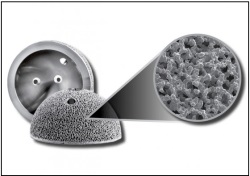
HIP involves the simultaneous application of high pressure and temperatures to significantly improve the mechanical properties and quality of cast products, such as blades and structures for jet engines. In addition, the process increases the density of 3D-printed parts made of powdered metals, improving product consistency, strength, and lifespan. All titanium, 3D-printed, and some nickel parts for jet engines must be treated by the HIP process. With this investment, Alcoa will be able to process any cast jet engine product in its current portfolio.
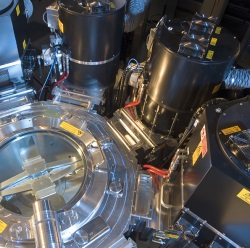
Alcoa is installing this new technology at its Alcoa Power and Propulsion facility in Whitehall, and expects it will be ready for product qualification in 2016. Alcoa’s eight other HIP production systems are also located in Whitehall, where it has a concentration of engineering and technical resources. Alcoa pioneered this technology in the aviation industry in 1973, and moved its first unit from Battelle Laboratory to Whitehall in 1975.
The company expects robust global aerospace sales growth of 9 to 10% in 2015, driven by strong deliveries across the large commercial aircraft, regional jet, and business jet segments. It also sees a current nine-year production order book at 2014 delivery rates. Alcoa Power and Propulsion is expected to generate $2.2 billion in revenues by 2016 as a result of its organic growth.