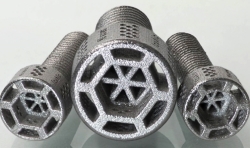
Alcoa, Pittsburgh, entered into an agreement with Airbus, France, to supply 3D-printed metal parts for commercial aircraft. The parts will be produced using comprehensive capabilities—from multimaterial alloy development to additive manufacturing and aerospace parts qualification. The first additive manufactured parts are expected to be delivered midyear.
The agreement draws on Alcoa’s aerospace experience and new technologies gained through its recent acquisition of RTI. The company also recently invested in 3D-printing and metallic powder production capabilities at its technical center outside of Pittsburgh.
Last year, Alcoa acquired RTI International Metals (RTI)—now known as Alcoa Titanium & Engineered Products (ATEP)—which grew its additive manufacturing capabilities to include 3D-printed titanium and specialty metals parts produced at ATEP’s Austin, Texas facility. The Airbus agreement draws on these capabilities as well as ATEP’s titanium ingot melting and billetizing, machining, finishing, and inspection technologies.
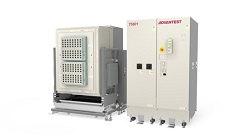
Alcoa will use advanced CT scan and hot isostatic pressing (HIP) capabilities at its advanced aerospace facility in Whitehall, Mich. HIP strengthens the metallic structures of traditional and additive manufactured parts made of titanium and nickel based superalloys. Through a $22 million investment in the technology, Alcoa today owns and operates one of the largest aerospace HIP technology complexes in the world.
Additionally, Alcoa is bolstering its additive manufacturing capabilities through a $60 million expansion in advanced 3D-printing materials and processes, including metallic powders. The expansion is located at the Alcoa Technical Center near Pittsburgh.