Materials scientists at Pennsylvania State University, State College, created a polymer dielectric material with high energy density, high power density, and excellent charge-discharge efficiency for electric and hybrid vehicle use. The key is a unique 3D sandwich-like structure that protects the dense electric field in the polymer/ceramic composite from dielectric breakdown.
“Polymers are ideal for energy storage for transportation due to their light weight, scalability and high dielectric strength,” says Qing Wang, professor of materials science and engineering. “However, the existing commercial polymer used in hybrid and electric vehicles, called BOPP, cannot stand up to the high operating temperatures without considerable additional cooling equipment. This adds to the weight and expense of the vehicles.”
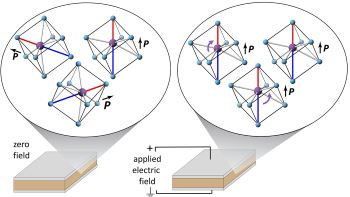
Researchers had to overcome two problems to achieve their goal. In normal 2D polymer films such as BOPP, increasing the dielectric constant, the strength of the electric field, is in conflict with stability and charge-discharge efficiency. The higher the field, the more likely a material is to leak energy in the form of heat. Researchers originally attacked this problem by mixing different materials while trying to balance competing properties in a 2D form. While this increased the energy capacity, they found that the film broke down at high temperatures when electrons escaped the electrodes and were injected into the polymer, which caused an electric current to form.
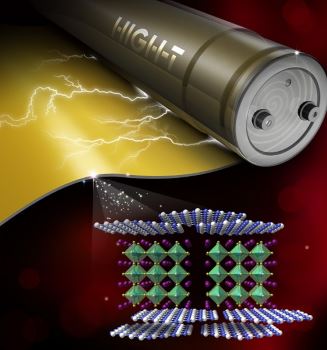
“That’s why we developed this sandwich structure,” Wang says. “We have the top and bottom layers that block charge injection from the electrodes. Then in the central layer we can put all of the high dielectric constant ceramic/polymer filler material that improves the energy and power density.”
The outer layers, composed of boron nitride nanosheets in a polymer matrix, are excellent insulators. While the central layer is a high dielectric constant material called barium titanate. “We show that we can operate this material at high temperature for 24 hours straight over more than 30,000 cycles and it shows no degradation,” Wang says.
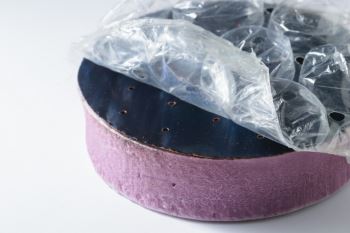
A comparison of BOPP and the sandwich structure nanocomposite, termed SSN-x, in which the x refers to the percentage of barium titanate nanocomposites in the central layer, shows that at 150°C, SSN-x has essentially the same charge-discharge energy as BOPP at it typical operating temperature of 70°C. However, SSN-x has several times the energy density of BOPP, which makes SSN-x highly preferable for electric vehicle and aerospace applications as an energy storage device due to the ability to reduce the size and weight of the electronics significantly while improving system performance and stability. The elimination of bulky and expensive cooling equipment required for BOPP is an additional bonus.
“Our next step is to work with a company or with more resources to do processability studies to see if the material can be produced at a larger scale at a reasonable cost,” Wang says. “We demonstrated the materials performance in the lab. We are developing a number of state-of-the-art materials working with our theory colleague Long-Qing Chen in our department. Because we are dealing with a 3D space, it is not just selecting the materials, but how we organize the multiple nanosized materials in specific locations. Theory helps us design materials in a rational fashion.”
In addition to Professors Wang and Chen, contributors include post-doctoral scholar Qi Li, Ph.D. student Feihua Liu, Matthew Gadinski, a former Ph.D. student now at DOW Chemical, Guangzu Zhang, a post-doctoral scholar, all in Wang’s lab, and Tiannan Yang, a graduate student in Chen’s group.
This work was supported by the U.S. Office of Naval Research.
Image caption — Boron nitride nanosheets (blue and white atoms) act as insulators to protect a barium nitrate central layer (green and purple atoms) for high temperature energy storage. Courtesy of Wang Lab/Penn State.