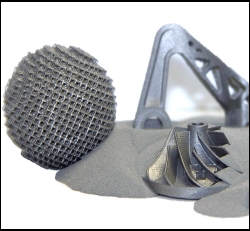
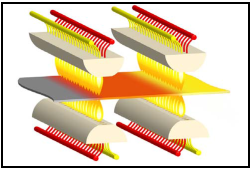
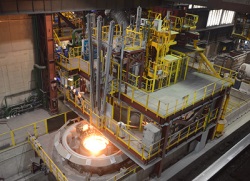
The University of Utah, Salt Lake City, announces that it recently received $3 million in funding to develop two process technologies for production of low-cost titanium powders, from the Advanced Research Projects Agency- Energy (ARPA-E) of the U.S. Department of Energy and its industrial partners. The first is Ti-6Al-4V spherical powder for 3D printing/additive manufacturing, and the second is commercially pure (CP) titanium powder.
This is a continuation of a project funded under ARPA-E’s METALS program since 2013. The goal of the continuation project is to produce powders at a pilot scale and validate the technology for industrial applications. The patented processes use low-cost commercial TiO2 as the raw material, and magnesium to reduce TiO2 in a hydrogen atmosphere. The processes are relatively simple and promise drastically reduced cost of production for both CP-titanium and spherical Ti-6Al-4V powders.
The process is based on a patented de-oxygenation technology that relies on hydrogen to thermodynamically destabilize Ti-O solid solutions. It can produce titanium powder with extra-low oxygen content. Producing low-oxygen titanium alloy powder for additive manufacturing has been one of the major factors contributing to its high cost. The technology of this project could potentially disrupt the existing marketplace.
The team is led by Professor Z. Zak Fang. Boeing and Arconic Titanium Engineered Products are industrial partners.