Society’s use of materials, with its humble beginnings in the Stone Age with natural materials, advanced through the Bronze Age and Iron Age with man-made alloys to the current Industrial Age and Modern Era. Now, in the 21st century, the functionality of society relies significantly on digital technologies in terms of integration of cyber-physical systems through digitization of knowledge, and the demand for new materials to enable and promote the digital age will continue to increase.
Penn State’s Zi-Kui Liu, the Dorothy Pate Enright Professor of Materials Science and Engineering, and his team are working to develop tools for digitization of knowledge for efficiently creating new materials and their robust manufacturing processes to fill this need. His team held virtual workshops, which was supported by the IBM Academic Initiative, to train people on how to use these tools.
Water and steam power mechanized production in the first industrial revolution, electricity-powered mass production in the second, and computers and automation propelled the digital revolution in the third. The fourth, often referred to as Industry 4.0, fueled by data and machine learning, is building on these digital advances by bridging the physical and digital world through cyber-physical systems.
“After steam power, electricity, and computerization, the process of digitization — often referred to as Industry 4.0 — is now ushering in Materials 4.0,” Liu said.
Knowledge of materials has improved steadily over the last few hundred years and guided the advancement of manufacturing processes manifested through the changes of forms of various materials. The digitization of materials knowledge, particularly stability and functionality of phases in materials with respect to external stimuli, has made significant strides in the last 50 years and promoted the paradigm shift from empirical, serendipitous discovery of materials towards the computational design of materials, Liu said.
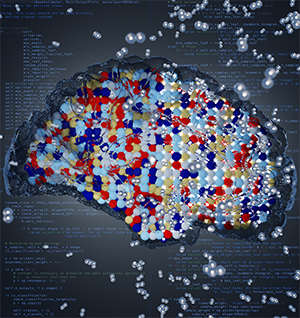
Using modeling software to design materials can drastically shorten the development time. The team created two software programs: PyCalphad and Extensible Self-optimizing Phase Equilibria Infrastructure (ESPEI) based on the research from two doctoral theses in Liu’s group. PyCalphad is a free and open-source Python computer language library for computational thermodynamics modeling that uses the CALPHAD method. ESPEI efficiently evaluates the thermodynamic model parameters within the CALPHAD method.
For more information: Penn State University