A novel engineered surface material called RepelWrap is offering great promise in medical settings – among myriad other uses. Its structure, inspired by the water-repellent properties of lotus leaves, makes it extremely liquid-repellent – which prevents pathogens from adhering to it. Effectively a self-cleaning surface, it has potential for covering everything from door handles to medical devices.
“This is a line of defense against emerging pathogens, including future threats we have not yet seen,” says Leyla Soleymani, who co-led the product’s development with Tohid Didar at the McMaster University Faculty of Engineering in Canada.
In earlier work, the McMaster team had shown that the wrap could effectively repel bacterial pathogens including E. coli, Pseudomonas aeruginosa, and methicillin-resistant Staphylococcus aureus (MRSA).
Two new studies out this week expand on RepelWrap’s pathogen-repellent properties.
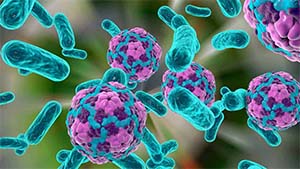
One of the studies, published in ACS Applied Materials & Interfaces, tested the wrap’s effectiveness against viruses. The researchers found that RepelWrap showed greatly reduced surface contamination with both herpes simplex virus 2 and human coronavirus 229E (a coronavirus in the same family as SARS-CoV-2), compared to a polyethylene plastic wrap control. The material could be used to prevent viral and bacterial contamination of high-touch surfaces such as door handles.
The second new study, published in Small, adapted RepelWrap to create a flexible, transparent film with potential medical applications.
Bacterial pathogens can form structures called biofilms on medical devices such as catheters. Such biofilms make the bacteria more resilient against antibiotics and present a major risk of dangerous infection for the patient.
The film developed by the McMaster team reduced biofilm formation by MRSA and P. aeruginosa by up to 98.5%, the study reported. The material also reduced blood adhesion, which can impair the performance of medical devices.
For more information: McMaster University