Bruker Corp., Germany, introduced the new XFlash 7 detector series for its QUANTAX energy dispersive x-ray spectrometer (EDS) systems, enabling chemical analysis of material samples in electron microscopes with ultimate speed, sensitivity, and reliability. Thanks to many new and unique features, XFlash 7 users in academic and in industrial research will benefit from further increased analytical performance, higher productivity and lower cost of ownership.
XFlash 7 detectors are available with a broad range of detector sizes, shapes and window materials, and building on the slim-line concept of its predecessor, all models are designed to provide the maximum collection angle for x-rays emitted by the sample, i.e., the optimal ratio between active detector area and sample-detector distance, for a given microscope sample chamber geometry. This is the key to reduced acquisition time and increased sensitivity, especially important when analyzing beam-sensitive samples under low kV and current conditions, when investigating nanostructures on the atomic scale, or when performing time-resolved data acquisition during in-situ experiments.
In order to turn optimized detection efficiency into reduced acquisition time for samples suitable for high x-ray intensities, all models of the XFlash 7 detector series feature Bruker’s new XPulse digital pulse processor. Based on the latest digital signal processing technology, the XPulse enables throughput rates of up to 1,000,000 counts per second (cps), resulting in unmatched analysis speed and productivity. This high signal throughput also perfectly supports ESPRIT LiveMap, a new software feature for real-time hyperspectral chemical imaging, which is being released along with XFlash 7.
With design for serviceability, any part of the XFlash 7 detectors, including the SDD sensor module, is easily replaceable at the customer site in case of any failure. In combination with predictive maintenance, enabled by new ESPRIT software tools for remote monitoring of relevant instrument parameters, XFlash 7 users can rely on maximum system uptime and minimum cost of ownership.
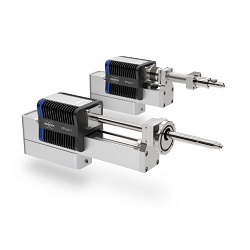
Image – Two models of the XFlash 7 series: XFlash 760 for SEM, and XFlash 7T60 for TEM.
For more information:
Bruker Corporation