A research team led by Worcester Polytechnic Institute, Worcester, Mass., found that by ditching toxic solvents, a new dry-coating process could make batteries more sustainable and cut manufacturing costs by 15% and energy use by 47%. It could also be faster-charging than today’s electrodes.
Currently, manufacturers make electrodes by coating metal foils with a slurry of a solvent and battery materials. Then they recover the solvent and dry the electrodes. The energy-intensive process uses ovens the length of a football field.
The team sprays a dry, powdery mix of electrode materials onto metal foils. An electric field at the sprayer’s tip applies a charge to the powder so it forms a uniform coating on the grounded metal substrate. The researchers then use pressure rollers to compact the material and form a dense electrode.
Other researchers have developed a dry-coating process that involves extruding electrode materials into freestanding, laminated films, says Yan Wang, team lead at Worcester Polytechnic Institute. But the new spray process “is much more scalable and more similar to the wet-slurry technology used today.”
The team used commercial electrode materials: lithium-metal oxides for cathode, and graphite for anode. Because the new process should produce thicker electrodes, Wang says electric vehicle batteries could pack more energy and extend the driving range.
Ajay K. Prasad, a mechanical engineer at the University of Delaware, says that this electrostatic spraying process might be too slow for high-speed battery manufacturing, but given the energy and environmental benefits of solvent-free electrodes, new methods such as this one “are worthwhile to explore.”
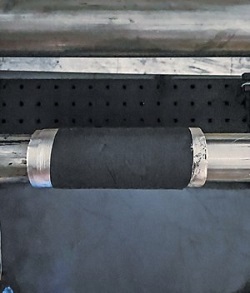
Image – A new dry spray-coating process allows researchers to make lithium-ion battery electrodes without the use of solvents, which should cut costs and energy use. Courtesy of: Joule.
For more information:
Worcester Polytechnic Institute