In addition to the following discussion of considerations for substrate preparation, part configuration, and coating location, more information can be found in the “Pre- and Postcoating Processing” Division of this Volume.
The substrate should be inspected for surface defects such as cracks, scratches, dents, porosity, organic contamination, and so on. Superficial flaws will be replicated in the sprayed coating, more so with thinner coatings. Conventional coatings do not add strength to the substrate and cannot be used to repair damage that may affect structural integrity.
Engineering drawings and job routers should be examined for coating location, coating thickness, and other coating attributes prior to cleaning, surface preparation, and coating. Understanding the part geometry is important to fixturing and tooling in order to maintain the proper spray angle.
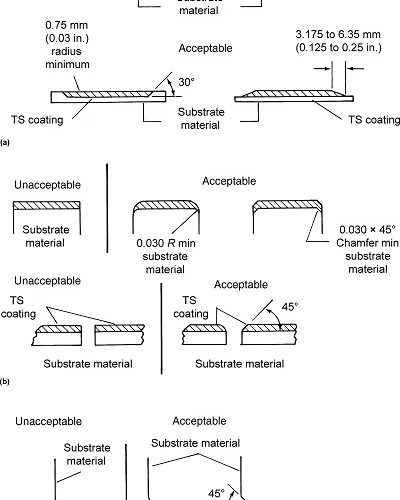
The following acceptable practices and design considerations should be considered for compliance with coating requirements (see Image):
- When the substrate target area is undercut to accept a coating (Image [a]), always chamfer or radius the corners before spraying. One rule of thumb is that the radius should equal or exceed the sprayed coating thickness.
- Likewise, the substrate edges as shown in Image (b) should be chamfered or radiused. Again, a 45° chamfer or radius equal to the coating thickness is suggested or recommended. Edge effects common to all coating techniques cause unacceptable stresses at the edges, which in turn will lead to cracking and coating separation.
- Image (c) shows the acceptable practices for depositing a coating onto a substrate and against a shoulder or boss. Using procedures similar to undercutting, corners must be radiused or chamfered. Sharp corners against a shoulder are likely to result in porosity and voids. Substrate surface preparation prior to thermal spraying is absolutely essential.
Steps must be undertaken correctly for the coating to perform to design expectations. For a one-of-a-kind part to be coated or repaired, surface preparation, masking, and setup may account for 75% of the total time required to complete the job. Considering labor and overhead expenses, the task should be done correctly the first time.
Image – Design of substrate geometry for thermal spray coating processes.
This information is from ASM Handbooks Online, Vol. 5A: Thermal Spray Technology, Coating Structures, Properties, and Materials. To find this information (subscription required), click on the link below and scroll down to Figure 4.
https://dl.asminternational.org/handbooks/edited-volume/12/chapter/134972/Introduction-to-Coating-Design-and-Processing