According to Straits Research, India, “The global thermal spray coatings market size was valued at USD $12.26 billion in 2022. It is estimated to reach USD $19.13 billion by 2031, growing at a CAGR of 5.06% during the forecast period (2023–2031).”
Growing demand from the healthcare industry drives the global market. In the healthcare industry, thermal spray coatings are utilized for various applications, including pacemakers, dental implants, prosthetics, and orthopedics. These coatings are porous and bioactive, allowing biomedical engineers to create implants interact with bone tissue more effectively. The hydrophobic qualities of thermally sprayed ceramic coatings on medical implantables facilitate cleaning and reprocessing. In addition, they are 100% anti-allergic due to the lack of chromium and nickel on the surface layer, ensuring patient comfort. The rising health issues linked with a sedentary lifestyle and poor eating habits are anticipated to raise the number of patients suffering from various ailments, which is expected to increase the need for implantable operations and further fuel the global market expansion.
Aerospace growth drives demand for thermal spray coatings in the Middle East, home to major oil producers like Saudi Arabia, Kuwait, Oman and Iran. In November 2022, Bodycote expanded thermal spray coatings capacity in the region through a partnership with Mathevon Group, focusing on business expansion, notably in Saudi Arabia.
Straits Research also found growing applications in renewable energy is creating tremendous opportunities. Thermal spray is widely used as a corrosion-protective coating on biomass incinerator boilers, wind turbine towers, and geothermal pipe systems due to its ability to form dense coatings with minimal porosity. The hydropower industry is experiencing difficulties due to the effects of hard particles on the surfaces of renewable energy components, such as hydro turbine component erosion. Thermal Spray Coatings HVOF process allows for dense tungsten carbide or chromium carbide coatings. It has been demonstrated that these coatings protect surfaces against erosion and corrosion. These coatings help safeguard hydro turbines against slurry erosion. Additionally, wind energy ensures the optimal performance of wind turbine components such as power systems, electronic control system sensors, generators, power systems, and gearboxes. Consequently, the increasing need for renewable energy from wind and hydropower technologies is driving the global thermal spray coatings market.
Regionally, Asia-Pacific’s thermal spray coatings industry share is anticipated to grow at a CAGR of 7.10% during the year 2023 to 2031. Increasing demand for thermal spray coatings from the automotive, aerospace, oil and gas, and energy and power industries in major economies such as India, China, and Japan is primarily responsible for the market’s rapid expansion. Airbus and other major aircraft manufacturers have established manufacturing facilities in the region. They procure airplane parts from Indian corporations such as the Tata Group, Dynamic Technologies, and the Mahindra Group. Due to the significant need for automotive components that must endure extremely high pressures and temperatures, the thermal spray coatings industry in the region may expand.
North America is estimated to grow at a CAGR of 3.05% over the forecast period. Strong demand from key industries, such as aerospace, oil and gas, automotive, medical, and power generation, is the critical factor driving North America’s thermal spray coatings market. The region’s availability of raw materials also expands the worldwide thermal spray coatings market.
Moreover, the United States and Canadian governments are funding efforts to produce superior coatings that could drive market growth. Additionally, the Government of Canada announced in February 2022 that it would allocate USD 18.92 million (CAD 24 million) from the New Frontiers in Research Fund to a project to develop novel molecular coatings that could reduce maintenance costs in industries such as healthcare, infrastructure, automotive, aerospace, and consumer goods.
Key Highlights
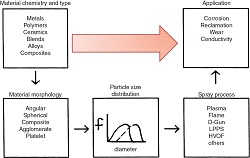
- Based on process, the global thermal spray coatings market is divided into combustion flame and electrical. The combustion flame segment is responsible for the largest market share and is anticipated to grow at a CAGR of 4.55% over the forecast period.
- Based on material, the global thermal spray coatings market is segmented into metals and alloys, ceramics, polymers, and others. The metal and alloys segment owns the highest market share and is expected to grow at a CAGR of 4.77% over the forecast period.
- Based on end-user, the global thermal spray coatings market is segmented into aerospace, energy and power, automotive, healthcare, machinery, agriculture, electrical and electronics, and others. The aerospace segment is the highest contributor to the market and is expected to grow at a CAGR of 4.17% over the forecast period.
- Asia-Pacific is the most significant shareholder in the global thermal spray coatings market and is anticipated to grow at a CAGR of 7.10% during the forecast period.
For more information:
Straits Research Pvt. Ltd.