Chevron Corp., Houston, Texas, has completed and released a root cause analysis of the Bishop well incident that happened near Galeton, Colorado, in April, saying equipment assembly errors and inadequate fluid barriers contributed to the blowout.
The uncontrolled release lasted five days before it was contained on April 10. As the blowout unfolded, about a dozen families in the area were evacuated. Some residents have yet to return to their homes.
Condensate and crude oil spewed onto surrounding properties, and cleanup efforts have involved environmental testing and remediation. Cleanup efforts are expected to last until 2030.
According to Chevron, on April 6, a wellhead technician contractor was in the process of installing a production tree on a well at the Bishop Well pad when a loss of containment occurred. The incident resulted in the release of fluids, which were made up of gas, crude oil and mostly water, according to the report.
The technician was struck by the production tree as it fell to the ground, which resulted in a leg fracture, the report says.
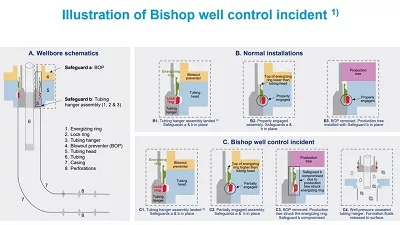
The investigation identified these as the primary root causes of the incident:
- Improper assembly of the installation equipment for the production tree by the on-site wellhead technician contractor
- Inadequate setting of the barrier (tubing hanger assembly) designed to prevent the flow of liquids.
According to Chevron, they have immediately taken action to address the issues by:
- Doing advance assembly of installation equipment
- Enhanced barriers including the use, testing and verification of downhole packers as a secondary barrier
- Reviewing and updating wellhead procedures and equipment
- Evaluating technological options to verify proper setting.
“We have also been diligently working to get residents back in their homes. Thankfully, almost all of those families are back in their homes. We continue to actively work with the remaining homeowners on next steps,” said Kim McHugh, vice president of the Chevron Rockies Business Unit. “In addition, we are working with land and agricultural property owners within a half mile to a mile and a half to conduct agriculture assessments.”
Image – A diagram for what went wrong at the Bishop Well that made it spew water, gas and oil. Courtesy: Chevron.
For more information:
Chevron Corp.
https://www.chevron.com/