Leica Microsystems, Switzerland, has launched two cameras that are ideal instruments for routine brightfield (Leica DMC2900) or fluorescence (Leica DFC3000 G) applications. Both are equipped with sensors that allow live images of up to 30 frames per second and a USB 3.0 interface for fast data transfer. The Leica Application Suite and the fluorescence counterpart Advanced Fluorescence software platform provide for image acquisition and support users in analysis and documentation.
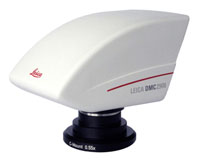
The Leica DMC2900 is a USB 3.0 microscope camera with a 3.1 Megapixel CMOS sensor for standard brightfield applications in research, industry, and life sciences. Routine applications in these fields often require capturing, documenting and analyzing color images of microstructures in little time. Therefore, the camera is equipped with a sensor that will produce live images of up to 30 frames per second and a processing power to match tasks such as capturing multiple images in mosaics or z-stacks. Its CIE-Lab color engine processes images real time with stable live image speed. Data transfer via USB 3.0 interface saves users time when documenting their work and will make the camera compatible with every notebook.
The Leica DFC3000 G is a grayscale USB 3.0 microscope camera for routine fluorescence applications. It features a passive cooling architecture and correlated pixel double sampling and will therefore provide for clear fluorescence signals and low background noise. With its highly sensitive CCD sensor, it is particularly suitable for low light situations such as fluorescence. Providing live images of up to 30 frames per second, microscope users may inspect samples rapidly and protect their specimen from photo damage. Data are transferred fast via USB 3.0.