Admedes Schuessler, Germany, reports that its Blue Oxide surface treatment for controlled thermal oxidation creates a 15- to 100-nm oxide layer on Nitinol with pure and dense TiO2, without causing performance-fading byproducts. In a study reported during SMST 2015, Nitinol implants with different surface conditions were investigated by surface-sensitive test methods.
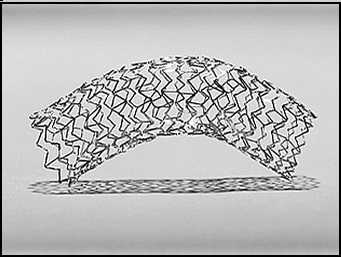
In the study, four groups of braided devices and two groups of heart valve frames were manufactured without a final surface finish. Four different surface conditions, electropolishing, electropolishing and passivation, light oxide, and Blue Oxide were applied to the braided parts. The heart valve frames were finished by electropolishing and Blue Oxide.
Morphology, thickness, mechanical stability, electrochemical properties such as breakdown potential, and homogeneity were determined by SEM, Auger spectroscopy, fatigue testing, and impedance spectroscopy. The biocompatibility of the blue oxide layer was documented using cell-growth tests.
Test results were correlated with the different surface conditions. Results are presented and discussed in “Blue Oxide – Next Generation Surface Finish” at SMST 2015. Authors of the paper include Dr. Andreas Schuessler, GmbH; Mr. Gerd Siekmeyer, Admedes Schuessler GmbH; Mr. Chris Bräuner, Admedes Schuessler GmbH; Mr. Michael Quellmalz, Admedes Schuessler GmbH; Dr. Giorgio Cattaneo, Acandis GmbH u. Ko. KG.; Werner Mailänder, Acandis GmbH u. Ko. KG.