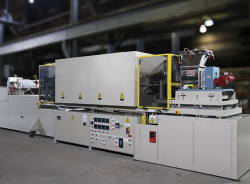
Harper International, Buffalo, N.Y, has been awarded a contract to supply a hot cell Rotary thermal processing system to treat waste from nuclear medicine production at the Australian Nuclear Science and Technology Organisation (ANSTO). Synroc technology has been developed to provide a safe, secure matrix for the immobilization and final disposal of radioactive waste.
It will be utilized to encase radioactive wastes from the production of the radioisotope Molybdenum-99 (Mo-99), the isotope used for 80% of nuclear medicine procedures. This includes the diagnosis of cancers, heart disease, and muscular and skeletal conditions.
The Rotary thermal processing system includes an advanced heating element design for increased robustness and ease of remote operation, and an enhanced modular design of components for ease of remote maintenance in a hot cell.
“In addition to waste from nuclear medicine production, we foresee that this new technology can also benefit other applications in the future, such as processing spent fuel waste from other international power generating nuclear reactors,” commented Dr. Prasad Apte, Director of Technology at Harper International.
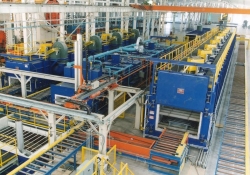
Along with waste remediation, Harper offers technology solutions such as Pusher and Rotary furnaces for nuclear materials processing applications, including sintering UO2 pellets for reactor fuel rods, oxidation of UO2 pellets, swarf, and powder to U3O8, denitration of uranyl nitrate, and hydrofluorination of UO2 pellets.
ANSTO is one of Australia’s largest public research organizations and is the center of Australia’s nuclear science capabilities and expertise – operating the nation’s only nuclear reactor, OPAL. Australian Mo-99 is produced with low enriched uranium (LEU) target plates in the LEU fueled OPAL reactor, leading the global push toward nuclear nonproliferation.