Pennsylvania State University, State College, reports that its researchers have teamed with U.S. DOE scientists to develop a cost-effective ion-exchange process to extract rare earth elements from coal byproducts. Ion exchange involves rinsing the coal with a solution such as ammonium sulfate that releases the REEs that are bound to the coal.
The 17 rare-earth elements support more than $329 billion of economic output in North America, according to the American Chemistry Council, and the United States Geological Survey expects worldwide demand to grow more than 5% annually through 2020. Rare-earth elements are needed for the production of computers, smart phones, rechargeable batteries, electric vehicles, magnets, chemical catalysts, and much more. Currently, China produces more than 85% of the world’s rare-earth elements, with the United States second at just over 6%.
“We have known for many decades that rare-earth elements are found in coal seams and near other mineral veins,” said Sarma Pisupati, professor of energy and mineral engineering at Penn State. “However, it was costly to extract the materials, and there was relatively low demand until recently. We wanted to take a fresh look at the feasibility of extracting REEs from coal because it is so abundant in the United States.
“Essentially, REEs stick to the surface of molecules found in coal, and we use a special solution to pluck them out,” said Prof. Pisupati. “We experimented with many solvents to find one that is both inexpensive and environmentally friendly.” The team reported that ammonium sulfate worked best.
Extracting 2% of the available REEs would provide an economic boon to companies, the team said.
“We were able to very easily extract 0.5 percent of REEs in this preliminary study using a basic ion exchange method in the lab,” said Prof. Pisupati. We are confident that we can increase that to 2% through advanced ion exchange methods.”
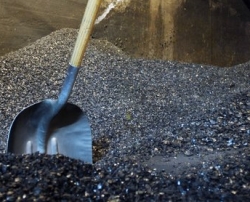
The researchers used coal byproducts in their study, some of which were discarded or marked as refuse during mining operations due to poor quality. Finding more uses for discarded coal could provide yet another economic benefit to companies.
In their study, the team also identified the locations within the coal seam that contained the highest amounts of REEs. Often the highest concentration is found in the poorest quality coal, said Prof. Pisupati.
The team is now collaborating with several Pennsylvania coal-mining companies to explore the viability of a commercial extraction operation.