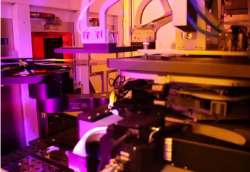
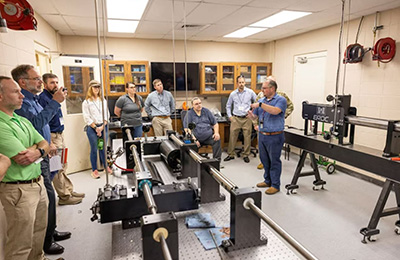
Ultratech Inc., San Jose, Calif., announces a follow-on order from a major foundry for its LSA101 laser spike anneal system equipped with the dual-beam option, which provides a second low-power laser that adds flexibility to chip production. The dual beam enhances yield and enables low thermal budget processing that is required for advanced applications such as gate stack formation, silicide, or post-silicide anneal.
The system will be used for 28nm production, and is expected to ship in the second quarter of 2016.
The industry is experiencing a second wave of growth in the advanced planar node technologies, including 28nm logic. This is due to the high cost and challenges to manufacturing chips at leading-edge FinFET nodes; lithography alone represents close to 45% of the overall spending when considering triple patterning and other advanced lithography techniques. As a result, many foundries, especially those in China, are expanding their 28nm capacity as end customers take advantage of the optimal performance-to-cost ratio at this node. This trend may extend the 28nm node longer and at larger volumes than previously expected.
“This LSA system order is an example of the growing manufacturing opportunities for cost-effective nodes such as 28nm and above,” says Arthur W. Zafiropoulo, Ultratech Chairman and Chief Executive Officer. “When comparing the different nodes, 28nm was the last strong planar node and provided the lowest cost per transistor. As a result, customers around the world are increasing their 28nm capacity.” Built on the customizable Unity Platform, LSA101 with the dual beam option expands the process space by adding a second low-power laser beam that adds process flexibility and enables millisecond annealing with a low thermal budget process.
Inserting a millisecond anneal step post-junction formation, such as gate stack formation, silicide, or post-silicide anneal, has been shown to improve leakage and device reliability, while reducing contact resistance and improving both performance and yield.
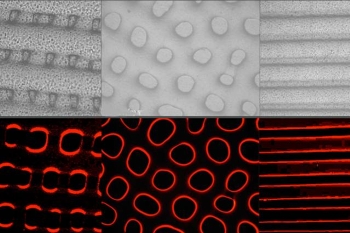
Compared to competing millisecond annealing technologies, LSA with dual beam offers the lowest thermal budget millisecond anneal process, along with superior within-die uniformity for different layouts. This performance is provided at a significantly lower cost of ownership, due to higher throughput and low cost of consumables. The LSA101 delivers high flexibility and extendibility for advanced annealing applications, and is currently in high-volume production for 28nm and below logic devices.