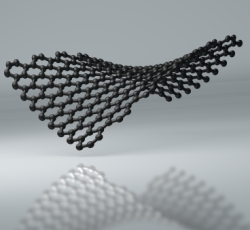
Chalmers University of Technology, Sweden, announces that its researchers have shown that carbon nanomaterials such as graphene can replace expensive metals such as tin, silver, tungsten, beryllium, and indium in electronic devices.
Rickard Arvidsson and Björn Sandén have investigated whether the carbon nanomaterials graphene, fullerenes, and carbon nanotubes have the potential to replace 14 scarce metals in several areas of application. They found potential technology-based solutions to replace the metals with carbon nanomaterials for all applications except for gold in jewelry. The metals closest to being able to substitute are indium, gallium, beryllium, and silver.
“Today there are many new carbon nanomaterials with similar properties to metals,” says Dr. Sandén. “It’s a welcome new track, and it’s important to invest in both the recycling and substitution of scarce metals from now on.”
The Chalmers researchers have studied the main applications of 14 different metals, and by reviewing patents and scientific literature have investigated the potential for replacing them by carbon nanomaterials. The results provide a unique overview of research and technology development in the field.
“There are potential technology-based solutions for replacing 13 out of the 14 metals by carbon nanomaterials in their most common applications. The technology development is at different stages for different metals and applications, but in some cases, such as indium and gallium, the results are very promising,” Dr. Arvidsson says.
The research findings were recently published in the Journal of Cleaner Production. The researchers stress the significant potential benefits from reducing the use of scarce metals, and they hope to be able to strengthen the case for more research and development in the field.
“Carbon nanomaterials are only a relatively recent discovery, and so far knowledge is limited about their environmental impact from a life-cycle perspective. But generally there seems to be a potential for a low environmental impact,” adds Dr. Arvidsson.