Corrosion is difficult to prevent, as the exact mechanism that accelerates its growth on metals and alloys has remained elusive to engineers.
Now an international team of scientists has peered into the atomic-level workings of water vapor corrosion, using an environmental transmission electron microscope (TEM). Their work, published in Nature Materials, reveals how the involvement of protons speeds the corrosion process.
Knowing how water vapor such as mist or steam corrodes metals and alloys can help engineers keep industrial systems working at peak performance longer. Armed with that knowledge, engineers can also improve catalytic conversion process.
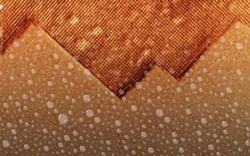
Scientists studied the effect of water vapor and elevated temperatures on a nickel-chromium alloy. They directly observed oxide growth on the alloy during corrosion at the atomic level. What they discovered was a complex dance of protons, cations, and anions that led to increased corrosion and a more porous structure of the oxide.
Then they modeled the process through computer simulations that revealed the role of hydrogen in stabilizing the observed structures.
Their work provides insights into how water vapor might change other materials, particularly at elevated temperatures.
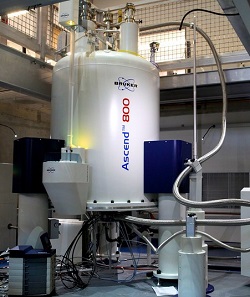
The research team was from Pacific Northwest National Laboratory, Chinese Academy of Sciences, and State University of New York at Binghamton. They used an environmental transmission electron microscope, located at the Environmental Molecular Sciences Laboratory (EMSL), a DOE Office of Science user facility.
************
Image – An international research team studied the atomic-level workings of water vapor on a nickel-chromium alloy to provide new insights that could help prevent metal corrosion. Courtesy of EMSL.
For more information:
Nature Materials, “Atomic origins of water-vapor-promoted alloy oxidation”