Researchers have demonstrated how a detailed “cradle to grave” evaluation at the outset of new metal mining explorations can greatly mitigate negative environmental impacts.
A team of researchers from the University of Exeter, Minviro, the British Geological Survey, and the Circular Economy Solutions Unit has shown the benefits of utilizing a life cycle assessment (LCA) in the quest to enhance “green” mining techniques. LCAs are used to assess the environmental impacts associated with the life cycle of commercial products, from extracting the raw materials to the use and, ultimately, their disposal.
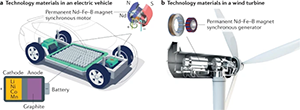
With the growing demand for a transition to renewable energy sources, the need to source sustainable, environmentally friendly raw materials and technology metals has risen. As a result, the quest to source and unearth rare earth minerals, lithium, cobalt, and graphite, amongst others, for electric car batteries, turbines and solar panels — with minimal impact on the natural environment—has magnified.
The research team outlines how an LCA that integrates considerations around the geology, mineralogy, and geometallurgy can help identify potential hot-spots before new extraction operations are begun.
This new approach will allow geologists to help select potential exploration targets that naturally lend themselves to lower environmental impacts—resulting in finding the best metal deposits with the lowest potential natural disturbance.
Dr. Xiaoyu Yan of the Environment and Sustainability Institute at the University of Exeter said, “Understanding the environmental impacts of emerging technologies over their entire life cycle, particularly the raw materials supply stage in the case of clean energy technologies, is key to ensure that they are truly sustainable.”
For more information: University of Exeter