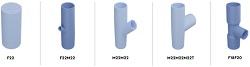
In a study published in PLoS One, researchers from hospitals and companies in France assessed five 3D-printed fittings with and without coatings over a period of 18 months.
The coronavirus disease pandemic (COVID-19) increased the risk of shortage in intensive care devices, including fittings with intentional leaks. 3D-printing has been used worldwide to produce missing devices. Here we provide key elements towards better quality control of 3D-printed ventilation fittings in a context of sanitary crisis.
3D-printed designs were assessed for non-intentional (junctional and parietal) and intentional leaks: four fittings 3D-printed in-house using fused deposition modelling (FDM), one FDM 3D-printed fitting provided by an independent maker, and two fittings 3D-printed in-house using Polyjet technology. Five industrial models were included as controls. Two values of wall thickness and the use of coating were tested for in-house FDM-printed devices.
Industrial and Polyjet-printed fittings had no parietal and junctional leaks, and satisfactory intentional leaks. In-house FDM-printed fittings had constant parietal leaks without coating, but this post-treatment method was efficient in controlling parietal sealing, even in devices with thinner walls (0.7 mm vs 2.3 mm). Nevertheless, the use of coating systematically induced absent or insufficient intentional leaks. Junctional leaks were constant with FDM-printed fittings but could be controlled using rubber junctions rather than usual rigid junctions. The properties of Polyjet-printed and FDM-printed fittings were stable over a period of 18 months.
3D-printing is a valid technology to produce ventilation devices but requires care in the choice of printing methods, raw materials, and post-treatment procedures. Even in a context of sanitary crisis, devices produced outside hospitals should be used only after professional quality control, with precise data available on printing protocols. The mechanical properties of ventilation devices are crucial for efficient ventilation, avoiding rebreathing of CO2, and preventing the dispersion of viral particles that can contaminate health professionals. Specific norms are still required to formalize quality control procedures for ventilation fittings, with the rise of 3D-printing initiatives and the perspective of new pandemics.
Image – Five models of 3D-printed ventilation fittings
For more information:
Publication in PLoS One
https://journals.plos.org/plosone/article?id=10.1371/journal.pone.0263808