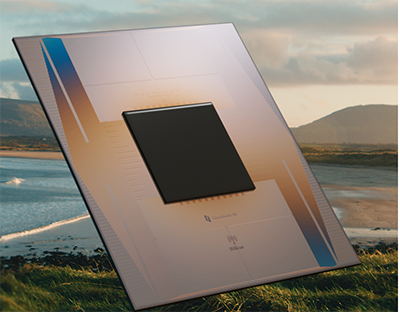
Google Quantum AI’s significant advance in quantum error correction using a surface code approach faces competition from a rival method that proponents claim offers greater efficiency and scalability. Researchers are divided on which approach will shape the future of practical quantum computing. Quantum computers, promising solutions to complex problems in materials science, chemistry, and logistics, are extremely sensitive and prone to errors, which increase as the machines scale up, making error correction crucial for practical use.
Researchers at Google Quantum AI recently demonstrated that their quantum processor, Willow, could mitigate this issue using the surface code, a mathematical framework that groups physical qubits into “logical qubits.” This grouping protects calculations from errors without negatively impacting performance.
The Google Quantum AI team members recently made headlines when they reported that they were able to scale from a 3×3 grid to 5×5 and then to 7×7 grids of physical qubits reduced errors by a factor of two each time.
The method they used — called a surface code — has long been the dominant strategy for quantum error correction. It arranges qubits in interwoven grids, with data qubits performing calculations and ancillary qubits monitoring for errors. While effective, it requires a significant number of qubits to operate, which has limited its utility, according to New Scientist.
In 2023, IBM introduced a rival method called QLDPC (quantum low-density parity-check) code. Unlike the surface code, QLDPC connects each qubit to six others, allowing them to monitor each other’s errors. According to IBM researchers, this method could achieve the same error-correction capabilities as the surface code but with far fewer qubits. For example, on paper, where the surface code might require 4,000 qubits, QLDPC could deliver equivalent performance with just 288 qubits.
“With QLDPC, that lower qubit overhead is hard to compete with,” said Joe Fitzsimons of Horizon Quantum, a quantum computing startup.
IBM has tailored its quantum chips to support the connectivity demands of QLDPC. While adding these connections poses engineering challenges, IBM has reported that the changes do not compromise the reliability of its chips.
Oliver Dial, an IBM researcher, emphasized the importance of tailoring codes to the capabilities of specific hardware during a presentation at the Q2B conference in December.
The competition between the surface code and the theoretical QLDPC highlights a broader challenge in quantum computing: the interplay between hardware and software. Superconducting qubits, like those used by Google and IBM, are limited in how they can be connected, making some error-correction methods more practical than others.
However, alternative technologies, such as qubits made from ultracold atoms, could provide greater flexibility.
“Maybe someone somewhere is working on a type of surface code that is really great, but right now there is competition [to the surface code],” said Yuval Boger of QuEra Computing, a U.S.-based quantum startup.
The QuEra team previously worked with ultracold-atom qubits to achieve one of the largest groups of logical qubits, exploring various codes to optimize their usefulness.
Despite the excitement around QLDPC, the surface code remains a strong contender, Google’s team countered. Its theoretical framework is well understood, having been studied for more than two decades. It also offers a balance between performance and hardware requirements, making it particularly suitable for the superconducting qubits used in Google’s Willow processor.
“The surface code is well understood, with a well-studied theoretical framework. It offers a balance between performance and required qubit connectivity,” said Sergio Boixo of Google Quantum AI.
Google, however, is not resting on its laurels. Boixo confirmed that the team is exploring alternative error-correction codes alongside the surface code.
For more information: Nature