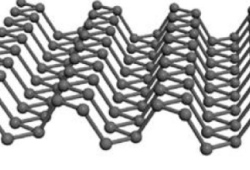
Researchers at the Center for Integrated Nanostructure Physics at Sungkyunkwan University, South Korea, report that they have developed a high-performance transistor made of black phosphorus (BP). They discovered that by changing its thickness and/or the contact metals, BP can make a high-performance n-type, p-type, or ambipolar (both n– or p-type) material. Its function can be changed without the need for doping.
This means that instead of having to fabricate a silicon-arsenic crystal sandwiched between silicon-boron crystals, a transistor can have a single, lightweight, pure black-phosphorus logic chip — no doping required.
Additionally, changing the metals used to connect the chip to the circuit has an influence on whether BP will be n- or p-type. Both can be put all together on one chip, just by changing its thickness and the contact metal. By making BP chips that are only several atomic layers thick, transistors can be made smaller and more energy efficient. BP may provide a thinner, more efficient alternative to silicon chips in electrical devices.
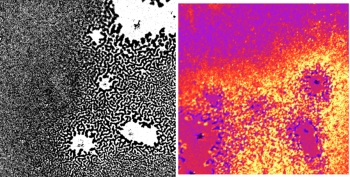
The problem with BP is that thin layers can be made only from scraping bulk crystalline BP samples, as no other manufacturing method exists yet. Tackling the scaling problem is already underway, with chemical vapor deposition (CVD) and other thin film growth techniques being investigated in labs across the world.