The University of Maryland, College Park, and the University of Kiel, Germany, report that their research team has developed a new shape memory alloy so tough it returns to its original shape even after being bent and heated over ten million times. They discovered that the alloy contains Ti2Cu precipitates that serve as sentinels to ensure complete and reproducible transformation in the course of each memory cycle.
University of Maryland professor Manfred Wuttig and his colleagues at the University of Kiel discovered that the key to the alloy’s durability was the presence of a small impurity, a precipitate composed of titanium and copper (Ti2Cu). These particles are compatible with both of the alloy’s phases, allowing it to mediate millions of complete and reproducible transformations while reducing fatigue.
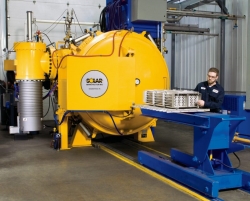
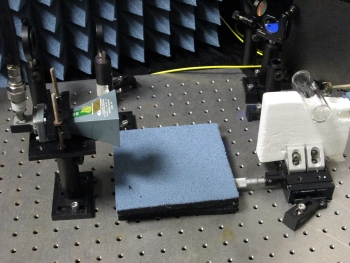
The previous highest-performing shape memory alloy could be deformed approximately 16,000 times before it succumbed to fatigue. The team used a special furnace system to rapidly heat and cool the samples a full ten million times, then examined the changes in microstructure.
The development was reported in Science, 29 May 2015.
http://mse.umd.edu/news/news_story.php?id=9094