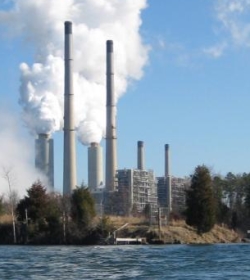
Duke University, Durham, N.C., reports that its researchers used a common industrial extraction technique based on nitric acid to extract rare earth elements from coal ash that contains amounts ranging from 337 to 591 ppm, depending on location. They discovered that “roasting” the coal ash with an alkali agent before dissolving it with nitric acid enabled a significant improvement in extraction efficiency. Neodymium, europium, terbium, dysprosium, yttrium, and erbium were extracted from the burned coal.
The researchers took coal ash samples from power plants located mostly in the American Midwest that burn coal sourced from all over the country, including the three largest sources: the Appalachian Mountains, southern and western Illinois, and the Powder River Basin in Wyoming and Montana. The content of rare earth elements was then tested with hydrofluoric acid, which is much stronger and more efficient than industrial methods, but is too hazardous to use on a large scale.
“The Department of Energy is investing $20 million into research on extraction technologies for coal wastes, and literally billions of dollars worth of rare earth elements are contained in our nation’s coal ash,” says Associate Prof. Heileen Hsu-Kim. “If a program were to move forward, they’d clearly want to pick the coal ash with the highest amount of extractable rare earth elements, and our work is the first comprehensive study to begin surveying the options.”
The study, published online on May 26 in the journal Environmental Science and Technology, showed that coal from the Appalachian Mountains contains the most rare earth elements. However, if extraction technologies were cheap enough, rare earth elements could be extracted from other sources as well.